
When Breakfast Needs to Move Fast
In Paarl homes, guesthouses, cafes and small catering kitchens, breakfast toast has to be quick, tidy and dependable. You need something that can be plated in minutes, travels well on a buffet and still feels like proper food, not just a rushed bite. That is where sun-dried tomato preserve and pickle jars earn their keep. They give you flavour without extra chopping, and they work with eggs, cheese, bacon, mushrooms or just a plain slice of toast.
For a family kitchen, the use case is simple. One jar can turn dry toast into a fuller breakfast, and the same jar can be used across several days for rolls, croissants or seed bread. For hospitality setups, the aim is consistency. Guests expect a neat portion, a clean plate and flavours that taste balanced early in the morning, not too sweet or too harsh. Cumato’s preserves fit that brief because they are made for spreading, layering and spooning straight from the jar.
At corporate breakfasts and event mornings, speed matters. Staff are usually working around coffee service, urns, cutlery trays and limited warming space, so toppings need to be ready before the first guest arrives. A preserve that holds its texture and a pickle that slices cleanly can save time when there is a queue and only a few hands on the line.
What You Need on the Counter or Buffet
You do not need much equipment to serve breakfast toast well, but the layout must be thought through. Keep the spread simple and place the items in the order people use them. If the preserve sits too far from the toast, or the butter knife disappears into a crowded table, the whole service slows down.
- Toaster or grill, with enough slots for the number of guests
- Butter or margarine, kept soft but not oily
- Clean knives for spreading preserve and butter
- Small bowls or ramekins for portions
- Tongs for toast and rolls
- Napkins and a waste bowl for used spoons or wrappers
- If serving a breakfast spread, place eggs, cheese and sliced tomato close by
For guesthouse or hotel service in coastal areas like Gqeberha or Durban, covered containers are useful because humidity can affect bread texture and soften toast quicker than expected. In hotter inland kitchens around Pretoria or Johannesburg, keep opened jars out of direct sun and away from warm ovens. A clean, shaded counter gives you better control over the final plate.
How to Plan a Neat Serving Layout
Good breakfast toast service works best when the flow is logical. Start with bread, then toast, then spreads, then toppings. If you are serving rolls as well, keep the pickle option beside the savoury items so guests can build their own breakfast without needing instructions. This keeps the queue moving and avoids crossed up plates.
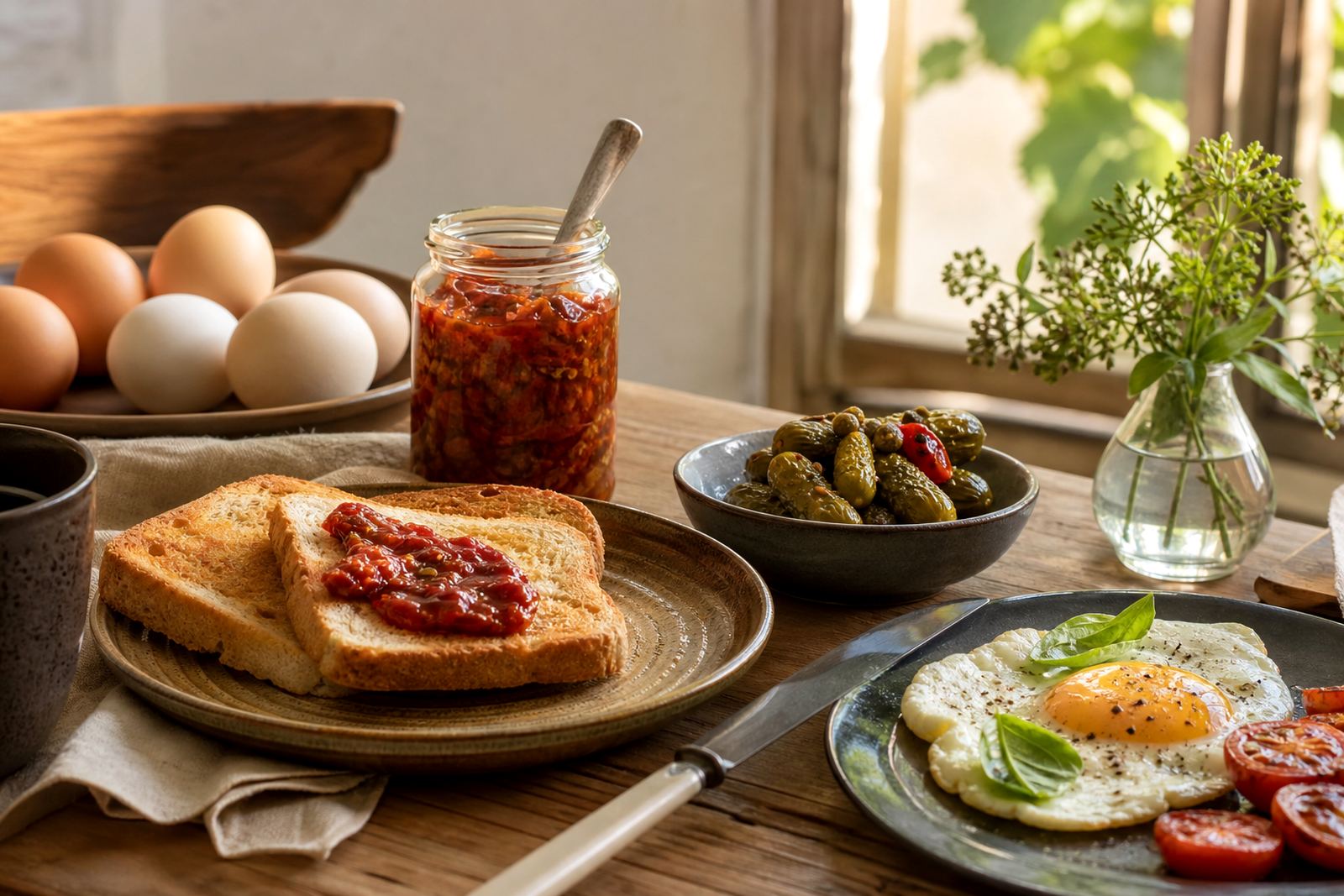
For plated breakfasts, use one slice of toast as the base and spread a thin, even layer of tomato preserve. Too much at once can make the toast soggy before it reaches the table. If you are adding eggs, place them on top or beside the toast so the yolk does not run straight into the bread unless that is the effect you want. Pickles work well in breakfast rolls with egg, cheese, ham or roasted vegetables, and they add brightness when the rest of the plate is quite mild.
In larger catering jobs, ask yourself how the food will hold for 20 to 30 minutes. Toast is best served immediately, but the toppings can be portioned in advance. That means less panic during load-shedding, when backup equipment and timing can become tricky. If power cuts are part of the day, have a manual serving plan ready, with a stack of pre-sliced bread, pre-portioned toppings and a clear plating order.
- Keep toast dry and crisp until the last moment
- Portion preserve in small bowls instead of leaving jars open on the buffet
- Use separate serving spoons for tomato preserve and pickles
- Label savoury toppings clearly for guests and staff
Best Ways to Use Tomato Preserve at Breakfast
Tomato preserve is the easy option when you want warmth and depth on a simple slice. It works on white bread, brown bread, seed loaf and even a toasted bagel. For a basic breakfast, spread it under fried eggs and a little grated cheese. For a slightly fuller plate, add a side of sautéed mushrooms or avocado if available. The preserve does the main flavour work, so you do not need many extras.
It also suits breakfast sandwiches where the filling is already rich. Bacon, omelette, grilled tomato and cheese all benefit from a spoon of preserve because it adds a soft savoury note. If you are preparing for children or mixed guests, keep the layer thinner and pair it with butter so the flavour stays familiar. In a brunch setting, you can also use it on toasted ciabatta or rustic bread with fresh herbs on top.
If you are serving a group, budget for more bread than you think. People often take a second slice when the preserve is good and the toast is crisp. A small brunch for 6 people may only need R120 to R250 in bread and basic toppings if you are cooking at home, while a more complete guesthouse or light hospitality spread can move into R350 to R700 depending on eggs, cheese and extra savouries.
Using Pickles in Breakfast Rolls and Sides
Pickles are the sharper part of the breakfast table. They work especially well in rolls because they cut through buttery bread and richer fillings. A sliced breakfast roll with egg, cheese and pickle has enough bite to feel complete without needing a lot of sauce. That matters when you are feeding people early, or when the kitchen wants to keep the menu moving without extra pans and steps.
Use pickles as a layer, not a flood. Too much liquid can soften the roll and leave the plate messy. Drain lightly before adding them to breakfast rolls, then build the filling in thin layers so the bread stays intact. They also work beside a cooked breakfast plate, where a small spoonful gives contrast to eggs, sausage or hash browns. In a buffet setting, this can be the one savoury note that keeps the tray from feeling flat.
- Best for breakfast rolls, toasties and savoury brunch boards
- Use a small amount to avoid soggy bread
- Pair with egg, cheese, roasted mushrooms or cold meats
- Keep portions chilled until serving time
For event orders, plan roughly R150 to R400 for a small tray of rolls with pickles and basic fillings, and R600 to R1 500 when you are catering a larger group with multiple toppings and bread choices. Those figures change with quantities, but they give a useful starting point when you are planning a church breakfast, office morning or family gathering.
Common Mistakes That Spoil the Plate
The biggest mistake is overloading the toast. Too much preserve or too many fillings will make the bread collapse before anyone finishes the first bite. Another common issue is serving toast too early. Once toasted bread sits too long, it loses the contrast that makes breakfast toast worth serving in the first place. Keep the timing tight.
People also forget to match texture with flavour. A soft bun with a wet filling can become heavy, while very dry bread can feel plain even with a good preserve. The fix is balance. Use enough butter, choose bread that toasts well and keep the toppings in proportion. If you are working with a buffet, test one or two plates before opening service so you can see how the bread behaves after a few minutes.
For home cooks, the other mistake is making breakfast too complicated. A good jar of preserve and a few sensible extras are often enough. For hospitality or bulk orders, the mistake is poor station layout. If the bread, knives and toppings are spread across the room, service becomes slow and messy. Keep everything within easy reach, and the breakfast line will run better.
Whether you are serving a table of four in Somerset West or a larger group in Cape Town, Johannesburg, Pretoria, Durban or Gqeberha, the goal is the same: clean plating, quick service and flavour that holds up from first slice to last.