
What a braai table needs to do
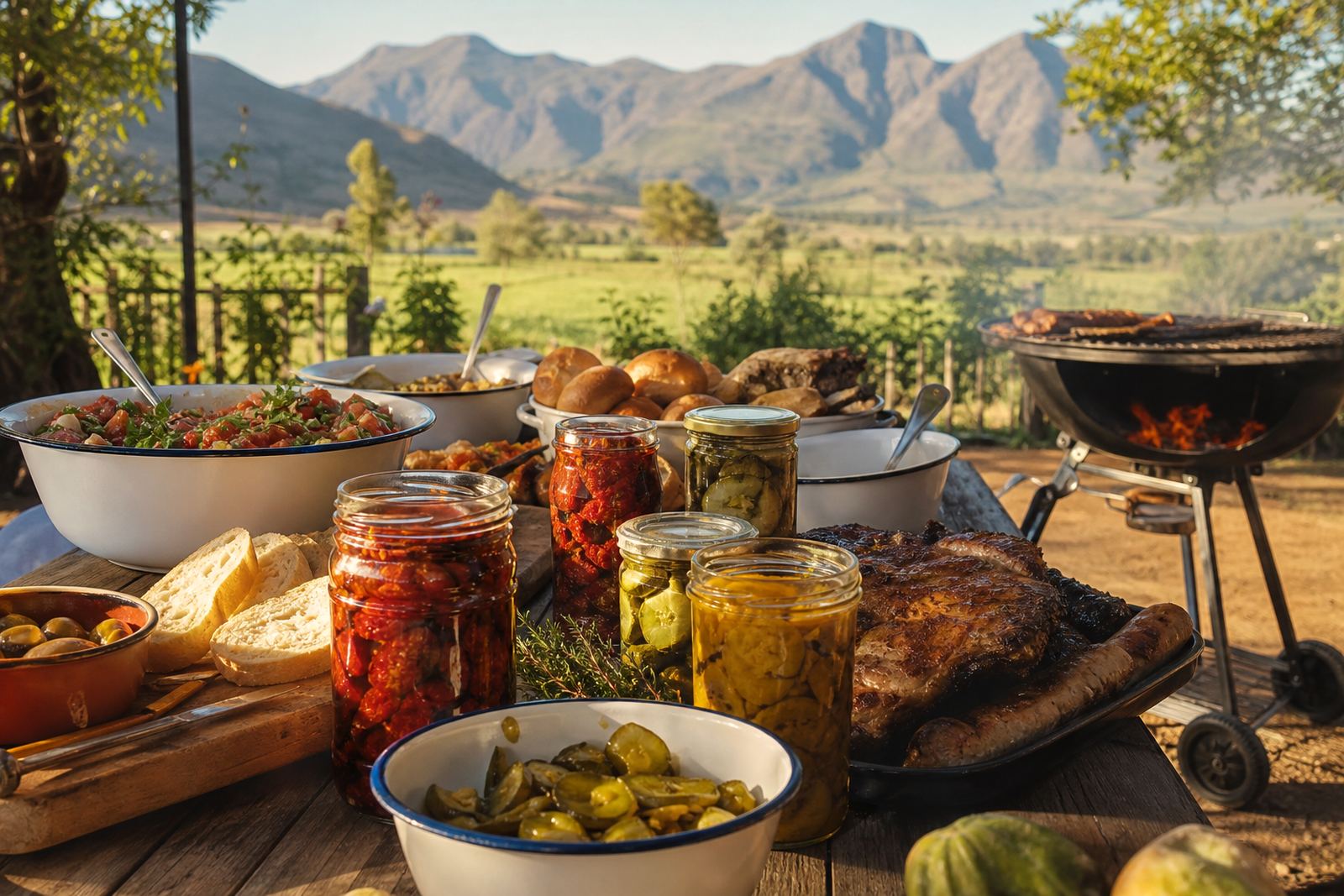
A braai table works best when it lets people help themselves without crowding the fire. The client situation is usually straightforward: meat is cooking, rolls are ready, and you need a few sides that hold well outdoors in Paarl heat, coastal damp in Cape Town or a windy afternoon in Gqeberha. Jars of preserve suit this kind of setup because they stay neat, are easy to spoon out and do not need last-minute heating.
For a simple braai table, the goal is not a full buffet. It is a practical spread that gives guests a choice of sharp, sweet and savoury notes. Sun-dried tomato preserves can sit beside bread, cheese, cold meats and grilled vegetables, while pickles cut through richer food and bring balance. If the table is set well, the host spends less time running back and forth to the kitchen.
Most households and small event teams use a basic equipment set: serving spoons, small bowls, a board or platter, tongs for bread and a cooler box or shaded spot if the weather is hot. For outdoor events in the Western Cape or Gauteng, keep jars out of direct sun and place them where people can reach them without crossing the braai area.
How to lay out jars on the table
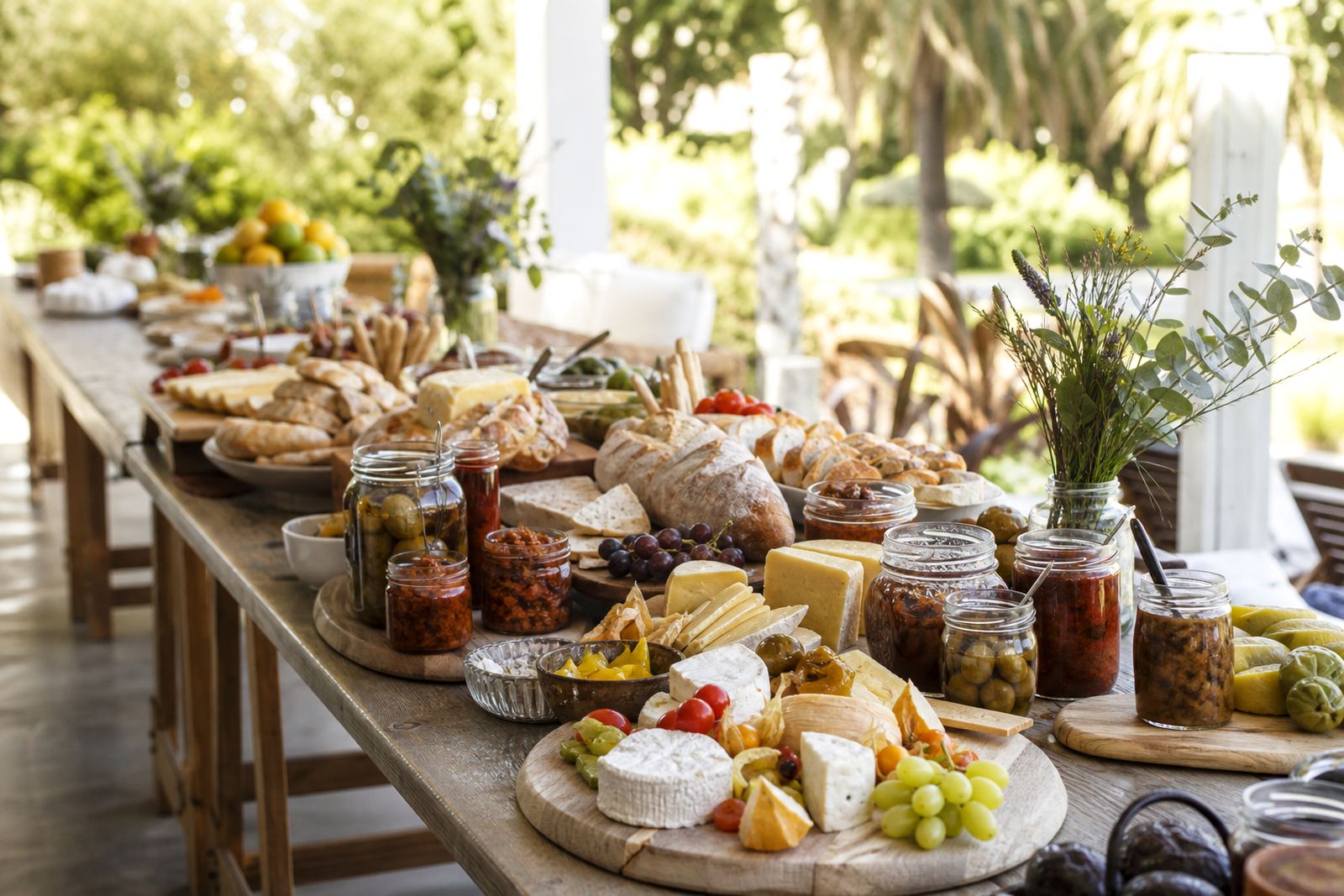
Place the jars in a row or small cluster near the bread, crackers or pap. Keep the lids off only once the table is ready to serve. If the table is long, put one set of jars at each end so guests do not all gather in one spot. This matters when you are feeding a mixed group at a family braai, a wedding venue in Stellenbosch or a corporate function in Johannesburg.
Use simple labels if you have more than one preserve flavour. That helps guests know what they are spooning onto their plates, and it keeps the table tidy. A small tray under the jars catches drips and makes cleaning up easier afterwards. If you are serving several dishes, group the jars with the items they go best with so the table feels organised rather than busy.
- Put heavier jars on a flat, steady surface so they do not tip.
- Leave space for serving spoons, napkins and small plates.
- Keep jar openings away from the edge of the table.
- Shade the table if the braai runs over a long afternoon.
- Have one spare spoon so you can swap it out if needed.
Pairing ideas for braai guests
At a braai, the best sides are the ones people can combine in different ways. Sun-dried tomato preserves work well with fresh rolls, boerewors rolls, grilled chicken pieces, roast potatoes and soft cheese. Pickles are useful alongside fat cuts, pap and even leftover cold meat the next day. The jars also help with vegetarian plates, which is handy when not everyone wants the same thing.
If you are planning for guests, think in layers. Start with bread, then add a savoury spread, then pickles or a tangy side, and finish with salads or grilled veg. This gives people enough choice without turning the table into a supermarket shelf. A good braai table should feel generous, but it must still be easy to serve from.
- Two jars are enough for a small family braai of 6 to 10 people.
- Four to six jars suit a larger group or mixed menu.
- For wedding or corporate catering, set one jar type per table if serving in batches.
- Use smaller jars for favours or individual place settings.
Common mistakes that make the table messy
One common mistake is putting too many items on the table at once. When the fire is going and people are moving around, clutter leads to spills and broken jars. Another mistake is leaving jars in the sun for too long, especially at outdoor venues where the afternoon heat builds up quickly. Even on a cooler day, the table can become untidy if there are no serving spoons or napkins within reach.
It also helps not to rely on one side only. A braai table needs variety, because guests have different tastes and different amounts of food on their plates. If everything is rich or everything is sharp, the meal feels unbalanced. You do not need a complicated spread, just a few well chosen items that work together.
For event planners, the other mistake is under-ordering. A table for 20 people in Pretoria will need more than a table for 8 at home in Somerset West. If you are unsure, allow extra jars for larger groups, since they are easy to keep aside for later use. It is better to have one unopened jar left over than to run short in the middle of service.
Budget ranges for a practical braai side setup
Budget depends on how many guests you are feeding and whether the jars are for self-serve sides, gifts or stock on a catering table. For a simple home braai, a practical side setup with 2 to 4 jars, bread, butter and a basic salad can sit in the lower hundreds of Rand. If you add more jars, specialty breads and a fuller spread, the total climbs quickly.
Here is a simple working guide for planning purposes:
- Small home braai: about R150 to R350 for jar sides and basic table extras.
- Medium family or friends gathering: about R350 to R900 depending on guest count.
- Event or wedding table: about R1 000 and up, especially if you are using multiple tables or gift portions.
Courier delivery across South Africa is useful when you are planning ahead for Cape Town, Johannesburg, Pretoria, Durban or Gqeberha. It gives you time to sort the tableware and layout before the day. For bulk orders, event favours and hospitality supply, it is wise to allow a bit of room in the budget for extras like labels, napkins and replacement jars. That small buffer can save you a lot of last minute running around.
Planning for different braai settings
A home braai, a guesthouse breakfast braai and a wedding service all need a different approach. At home, the jars can sit on a side table near the chopping board. For guesthouses or hospitality settings, the layout should be clear and easy to reset between groups. At weddings or corporate functions, the presentation matters, but so does speed. Guests should be able to spoon what they want and move on without waiting.
Our base in Paarl works with orders that travel across South Africa, so planning often comes down to timing. If you are ordering for a specific date, give yourself enough lead time to arrange the rest of the meal and the table setup. That is especially useful for seasonal orders, subscription boxes and stockist enquiries where the same preserve may need to work across different menus.
For a neat finish, keep the table simple. Use one cloth or runner, a few sturdy bowls, and jars that are easy to open and reseal. The more direct the setup, the better it works when people arrive hungry and the braai is still on the coals.