
When a salad needs more than lettuce
There are plenty of times when a salad is meant to carry a meal but the base is still plain. Think mixed leaves, cucumber, baby spinach, grated carrot, or chopped cabbage at a family braai in Paarl, a lunch counter in Cape Town, or a canteen in Johannesburg. That is where a salad accent earns its place. Pickles bring bite and tomato pieces add savoury depth, so the bowl tastes more complete without needing a heavy dressing.
This use case works well for home cooks, caterers, deli counters, guest houses and event teams looking for something quick to portion. A spoonful can lift a side salad, a grain salad or a sandwich platter. It also helps when fresh produce is a bit limited, which happens often enough in winter or after a long week when the fridge is not full. You do not need a complicated recipe, just a few good components and a clear idea of the final plate.
For many kitchens, the aim is consistency. The tomato pieces should be easy to mix through, while the pickles should be cut small enough to spread flavour without dominating every mouthful. That balance makes the same product useful across a lunch service, a picnic spread, or a tray of individual salads for an office order.
How to build the plate around the accent
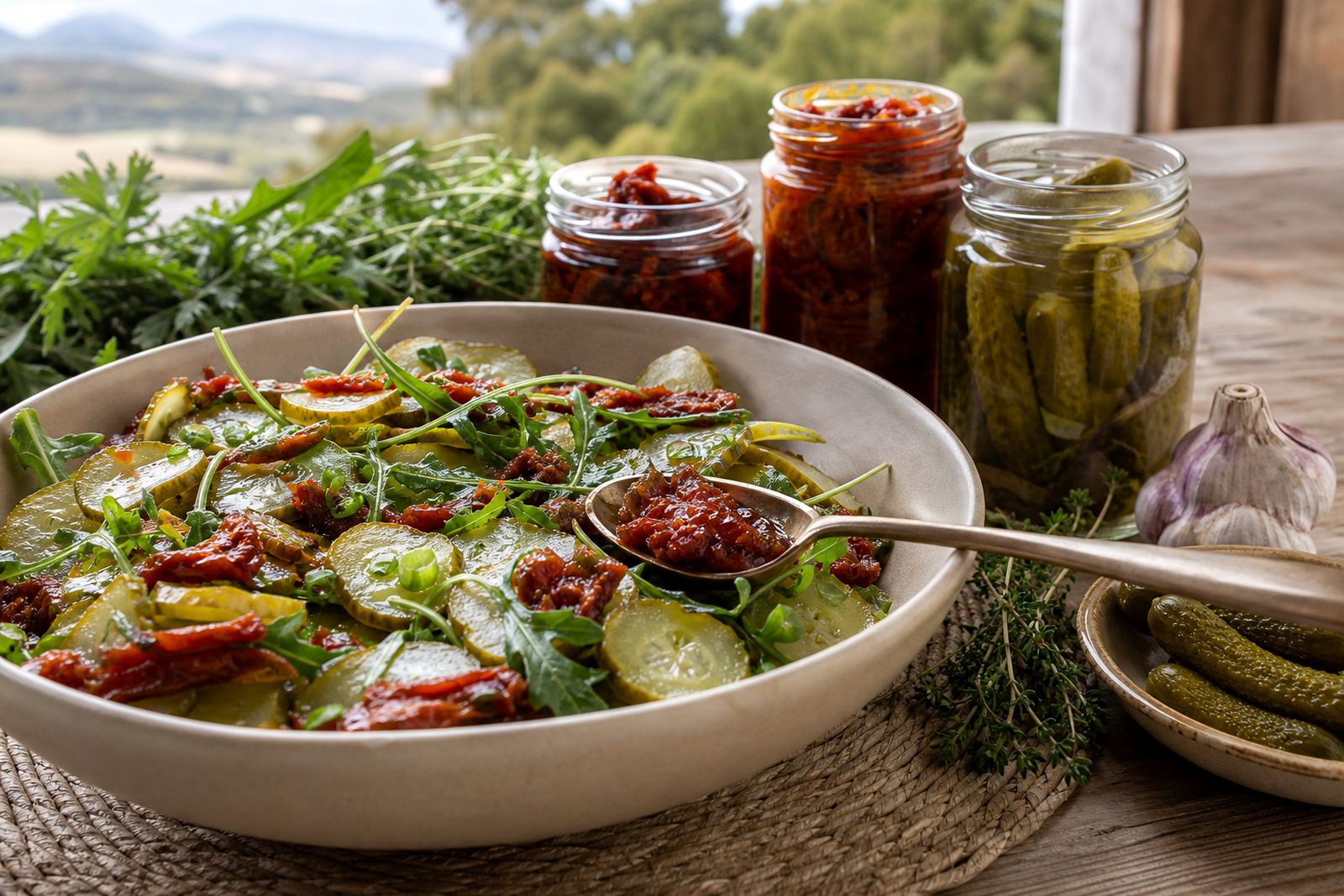
When planning a salad around preserved tomato and pickle pieces, start with a neutral base. Crisp leaves, grated vegetables, cooked couscous, new potatoes or beans all work well because they give the accent room to show. If the base is already strong, such as beetroot or marinated artichokes, keep the added preserve lighter so the flavours do not compete.
- Choose one main green or grain base so the salad feels tidy on the plate.
- Add one crunchy element, such as cucumber, red onion or shredded cabbage.
- Use the tomato pieces for body and colour, then tuck in pickle pieces for sharpness.
- Finish with a simple dressing, not too sweet, so the preserve can still come through.
For plated service, work with shallow bowls or wide salad plates so the colour is visible. For buffet service, use clear containers or labelled serving bowls where the red and green contrast can be seen from across the table. In outdoor settings around Stellenbosch, Somerset West or Durban, a good layout also helps the salad look fresh for longer because guests are not digging through one deep pile.
Typical equipment for prep and service
A salad accent setup does not need much special equipment, but it does need practical tools that keep the pieces clean and even. In a home kitchen the basics are enough, while a larger kitchen may use portioning tools and cold holding trays. If you are serving across a wedding, corporate lunch or hospitality order, the job becomes easier when everything is ready before the greens are tossed.
- Sharp knives for fine chopping of pickles and tomato pieces
- Cutting boards kept separate for vegetables and prepared ingredients
- Mixing bowls in different sizes for batching and tasting
- Measuring scoops or ladles for portion control
- Salad servers, tongs and plated service spoons
- Fridge space or chilled storage tubs for keeping ingredients cool
Load-shedding can complicate chilled service, so it helps to batch smaller amounts and keep unopened jars in the coolest available place. In coastal towns such as Gqeberha, humidity can also affect how quickly greens soften, so prep close to service time where possible. For a caterer working on a tight schedule, that timing is often more important than having a long ingredient list.
Portioning for homes, caterers and events
The amount you use depends on the setting. At home, a few teaspoons can be enough for a salad for two. For tray service or event catering, you may need a more measured approach so every plate looks the same. The aim is to add interest without making the salad wet or crowded. Too much preserve can pool at the bottom and make the leaves heavy.
As a rough guide, a small side salad for four can use about 60 g to 80 g of mixed tomato and pickle pieces. A larger batch for twenty guests may need 300 g to 500 g, depending on the other ingredients. For grain salads, you can use a little more because couscous, rice and barley absorb some of the flavour. For leafy salads, stay lighter and add the preserve in small clusters instead of mixing it everywhere.
Many buyers in Pretoria and Cape Town ask for gift boxes, bulk orders and seasonal orders because they want something practical that can be used across different dishes. A salad accent is flexible in that way. It is not only for one recipe, and it can carry through a lunch menu, a platter range, or a festive table without much extra work.
Common mistakes that flatten the flavour
The most common mistake is using a salad dressing that already tastes too strong. If the dressing is heavy on sugar or oil, the tomato and pickle pieces lose their punch. Another mistake is chopping the pieces too finely, which makes them disappear into the base instead of showing up in the bite. A salad accent should be noticed, even if only for a second.
- Do not overload the bowl with too many strong ingredients at once.
- Do not add the preserve too early if the salad will stand for a while.
- Do not drown the salad in dressing before tasting the balance.
- Do not use wet lettuce straight from washing, as it weakens the texture.
Salt is another point to watch. Pickles already bring seasoning, so extra salt may be unnecessary until the salad is assembled and tasted. That small adjustment matters in hospitality kitchens, especially when the same base salad is served alongside braised meats, grilled chicken or baked fish. In those cases the accent should support the meal, not fight with it.
Budget ranges for simple and event-ready salads
Budget depends on whether you are making one family bowl or a series of plated salads for an event. For a home cook, a salad accent can be a modest spend because only a small amount is needed per serving. For caterers and stockists, the cost is more about consistency and packaging than about the actual volume used in one dish.
As a working guide, a basic home salad using preserved tomato and pickle pieces might add about R25 to R60 to the total ingredient cost for a small bowl meant for four. A larger event salad for twenty guests may add R120 to R300 depending on the base ingredients, garnish and packaging. Corporate lunch platters, wedding orders and hospitality supply can sit higher because of labour, delivery and presentation requirements.
If you are planning for regular use, it makes sense to work from a repeatable portion plan. That way your costs stay predictable whether the order is going to a site in Johannesburg, a guest house in Somerset West, or a wedding venue outside Paarl. Clear portioning also helps with stock control, especially for subscription boxes and seasonal orders.