
When Pasta Needs a Faster Finish
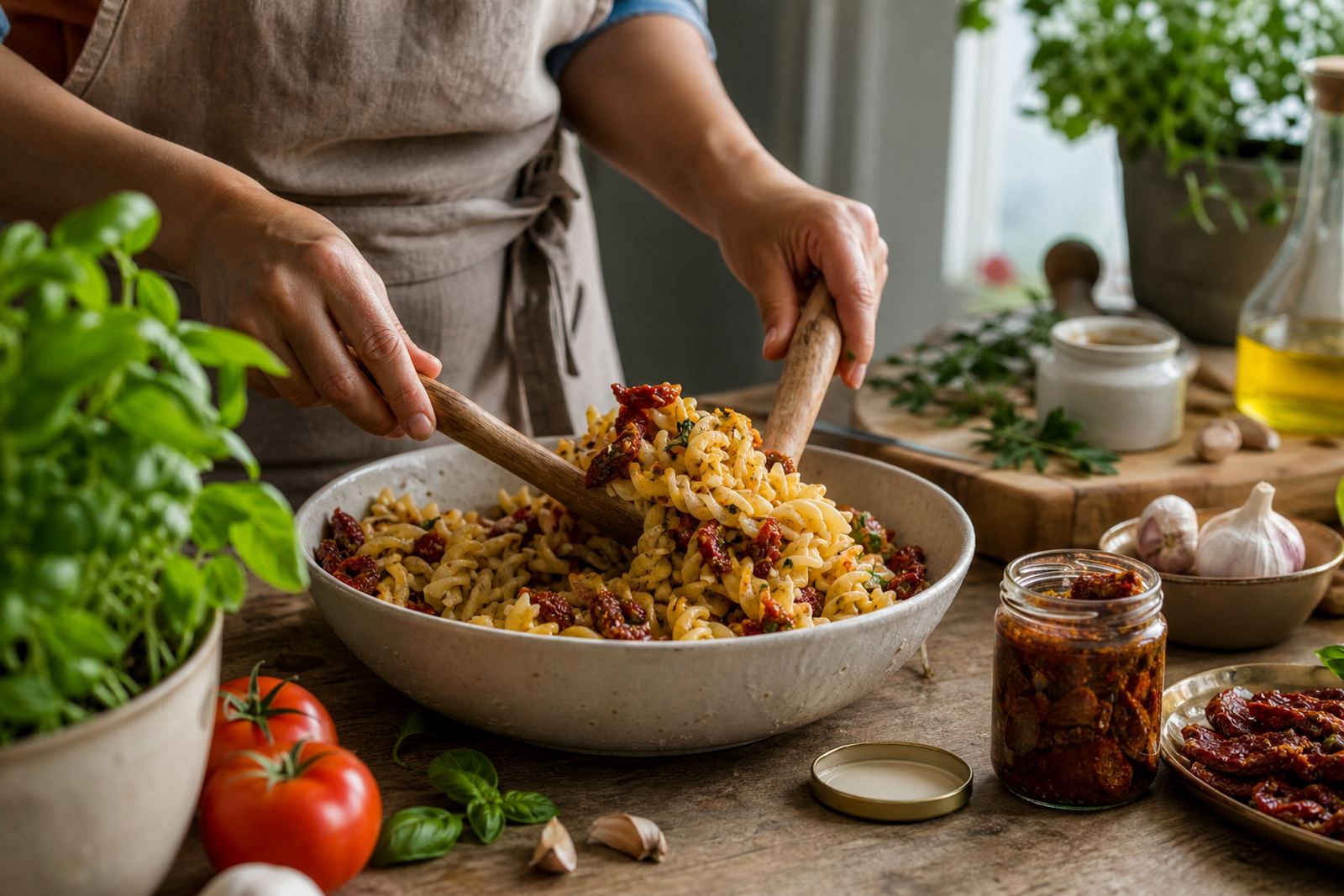
This use case suits cooks who want a plate on the table quickly without starting a sauce from scratch. In homes, guesthouses, canteens and small catering setups, hot pasta can be finished with preserve, olive oil, garlic, herbs and a little pasta water for a glossy coating that feels made to order.
It works well when the kitchen is short on prep time, the power is unpredictable during load-shedding, or the menu needs a simple option that still tastes deliberate. A tomato preserve with a chunky texture adds body, while a smoother preserve gives more of a sauce-like finish. Both are useful, depending on the dish.
Typical Kitchen Set Up for This Use
You do not need specialised equipment to finish pasta this way. Most kitchens already have what is needed: a pot for boiling, a colander, a sauté pan or wide saucepan, a wooden spoon, measuring spoons and a heat source that holds steady enough to warm the preserve through. In a home kitchen in Paarl or Stellenbosch, that might be a standard stove top. In a small lunch service in Cape Town or Durban, it may be a gas burner or induction hob.
- Large pot for boiling pasta
- Colander for draining, with a cup reserved for pasta water
- Wide pan so the pasta can be tossed properly
- Wooden spoon or spatula for folding through the sauce
- Serving bowls or trays for immediate plating
For hospitality and bulk service, shallow gastronorm pans or oven-safe dishes help keep the pasta warm for short holding periods. If you are serving in high humidity near Gqeberha or the coast, keep lids handy so the pasta does not dry out while waiting to go out.
How to Plan the Plate so the Preserve Works
The key is timing. Cook the pasta until just tender, then drain and move it straight into the warm pan with the preserve. Add a splash of pasta water so the preserve loosens and coats every strand or tube evenly. If you are using long pasta, toss gently so the sauce does not clump. For short pasta, stir with a little more care to get into the ridges and hollow centres.
Choose pasta shapes that hold onto the preserve well. Penne, fusilli, rigatoni and linguine all work, but the best choice depends on the rest of the plate. A simple pasta finishing station can be organised in three steps: boil, fold, serve. That keeps service moving, especially during lunch rushes or family orders where everyone wants food at the same time.
- Warm the preserve before the pasta comes off the heat
- Keep a mug of pasta water near the stove
- Add fresh herbs, grated cheese or pepper only at the end
- Serve straight away so the coating stays glossy
Common Mistakes That Weaken the Dish
One common mistake is adding the preserve to cold pasta. That leads to uneven coating and a flat finish. Another is using too much preserve at once. It is better to start with less and build up, because the pasta water and heat will spread the flavour across the pan. A third mistake is overcooking the pasta before mixing, which can make the final dish heavy and sticky.
It also helps to season carefully. Preserve brings its own salt and acidity, so taste before adding more. If you are serving with cheese, remember that some cheeses will pull the flavour in a different direction and can make the dish feel sharper than intended. Keep the process simple, otherwise the preserve gets lost under too many extras.
For larger kitchens, the other issue is holding time. Pasta that sits too long can tighten up and lose its sheen. If service is delayed, hold the sauce and pasta separately then combine in smaller batches just before plating. That is usually the cleaner option.
Budget Ranges for Home, Bulk and Gift Use
For home cooking, pasta finishing can be done on a modest budget. A standard grocery basket of pasta, preserve, garlic, oil and herbs can sit between R80 and R200 depending on portion size and the ingredients you already have. If you are making meals for a family of four, one jar of preserve can usually stretch further when used as a finishing ingredient rather than a full sauce base.
For small catering, hospitality or staff meal use, plan around the number of portions and the serving style. A light pasta finish for 20 to 30 portions may sit between R450 and R1 200, excluding protein and vegetables. If you are doing event favours or tasting bowls for corporate gifting, the costs rise with packaging and labour. Gift-style pasta packs or coordinated hampers can move from roughly R150 per unit to well above R500 depending on contents and presentation.
- Home meal finish: about R80 to R200
- Small event or staff meal batch: about R450 to R1 200
- Gift or hamper use: from about R150 per unit upward
Courier delivery across South Africa should be built into the budget for out of town orders. Paarl to Cape Town or Stellenbosch is one thing, but Johannesburg, Pretoria, Durban and Gqeberha need a longer lead time and a little planning around breakages and temperature control.
Best Fits for Restaurants, Homes and Event Kitchens
Pasta finishing is a good fit for a wide range of customers. Home cooks use it for weeknight dinners, guesthouse kitchens use it for quick plated meals, and hospitality teams use it when they need a reliable base that does not demand extra prep. It also works for wedding orders, event favours and seasonal menus where the food needs to be practical and consistent.
If you are building a stock plan, think in terms of repeat use. Keep a few jars on hand for busy weeks, school holidays or sudden functions. For bulk orders and stockist enquiries, it helps to know your average portion size and the shape of pasta you use most often. That makes reordering simpler and keeps wastage low.
Clients usually reach out through the enquiry form when they need help choosing the right quantity for home, hospitality or gifting. For kitchens that serve more than one site, the same preserve can be used across different service styles, which makes planning easier across Paarl, Cape Town, Johannesburg, Pretoria, Durban, Gqeberha, Stellenbosch and Somerset West.