
What a good sandwich filling needs to do
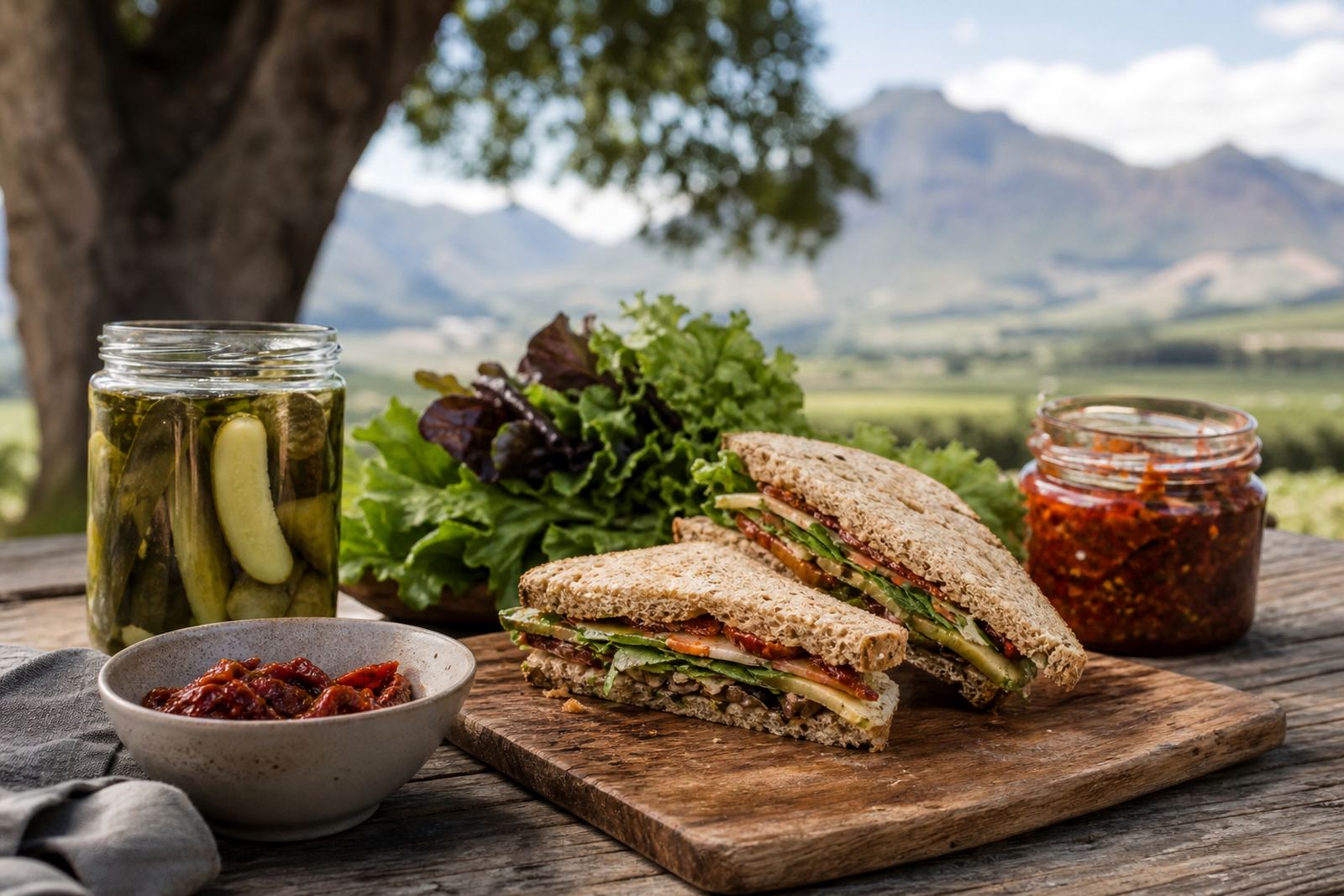
A solid sandwich filling has to do more than sit in the middle of bread. It should stay in place, give a clean bite and bring contrast so every mouthful is worth eating. That is where preserves earn their keep. A spoon of sun-dried tomato preserve adds sweet-savoury depth, while a pickle preserve brings sharpness and crunch without making the sandwich watery.
For home cooks, cafés and caterers, the aim is balance. Soft fillings need something firmer, rich fillings need a bright note and plain bread needs a bit of help. The best results usually come from layering, not mixing everything into one bowl. Keep the preserve where it can do its job, close to the bread, cheese or sliced meat. That way it lifts the flavour instead of getting lost.
- Use thick spreads first so the bread stays protected
- Place chopped vegetables or greens between wetter layers
- Keep delicate items like lettuce dry and chilled until use
- Slice sandwiches just before serving for the neatest finish
How to plan the filling around the bread
Bread choice matters as much as the filling. Soft white rolls, seeded loaves, ciabatta, rye and wraps all behave differently. A crusty roll can take a heavier filling, while sliced sandwich bread works better with thinner layers and a careful spread. In coastal areas like Cape Town and Gqeberha, extra moisture in the air can soften bread quicker, so it helps to toast lightly or build closer to service time.
When planning for bulk trays or lunch orders, work from the bottom up. Start with the spread, then add proteins or cheese, then crunchy elements, then greens, then the top slice. If the sandwich is travelling by courier or going out for a meeting, wrap it tightly and keep fillings compact. A sandwich with too much tomato, relish or dressing will slide around before it reaches the table.
- Use sliced loaves for office lunches and wrapped individual portions
- Choose rolls for heartier fillings and takeaway service
- Use wraps for tighter packing and easier courier delivery
- For platter service, pre-cut into halves or triangles for quicker handling
Three filling styles that work well with preserves
The easiest way to use preserves is to treat them as the savoury anchor in a simple formula. You do not need many ingredients. A good sandwich can be made from bread, butter or mayo, one preserve, one protein or cheese and one crisp element. That keeps prep manageable and the flavour clear.
For a deli-style chicken sandwich, spread butter or mayo on both sides, add sliced chicken, a thin line of sun-dried tomato preserve, cucumber and baby leaves. For a cheese sandwich, use pickle preserve with mature cheese, tomato slices and peppery greens. For a vegetarian option, combine roasted vegetables, hummus and a spoon of tomato preserve for extra depth. In each case, the preserve should be used as a layer not a flood, otherwise the texture goes soft too fast.
- Chicken, sun-dried tomato preserve, cucumber and baby leaves
- Cheese, pickle preserve, tomato and rocket
- Roasted vegetables, hummus and tomato preserve
- Tuna or egg with a little pickle preserve for a sharper finish
Equipment and prep for home kitchens and small caterers
You do not need specialist kit to put together good sandwich fillings, but a tidy set-up helps with speed and consistency. A clean chopping board, sharp knife, spreading knife, mixing bowl, measuring spoons and food-safe containers will cover most jobs. If you are making a larger run for a school function, corporate lunch or wedding order, add labelled tubs, gloves, foil, clingwrap and a tray or trolley for moving finished items.
For small food businesses in Paarl, Stellenbosch and Somerset West, the practical challenge is often timing. Fillings should be made in batches, then held chilled and assembled in order. Keep preserves in sealed containers and use clean spoons each time. If you are serving over a long window, set out a top-up station so the bread stays fresh and the filling station does not become crowded.
- Basic set-up: knife, board, bowls, spoons and containers
- Service set-up: trays, labels, wrap and chilled holding space
- Batch prep works best for 10, 25 or 50 sandwich orders
- Keep a separate utensil for each preserve to avoid mixing flavours
Common mistakes that spoil the result
The biggest mistake is overfilling. It may look generous, but too much filling makes the sandwich hard to hold and causes the bread to split. Another common problem is using wet ingredients without a barrier. Tomato slices, pickle juice and dressing can soak into the bread within minutes, especially in warmer weather or when the order has to travel across town. A little structure goes a long way.
Another issue is flavour balance. If the preserve is too heavy, it can overpower the rest of the sandwich. If it is too thinly spread, the sandwich tastes flat. The answer is to taste as you go and keep the layers even. For takeaway and courier orders, avoid very delicate greens and loose chopped fillings unless they are packed with care. Better to have a sandwich that holds its shape than one that looks generous and eats badly.
- Do not overload the bread with wet filling
- Do not mix every ingredient into one soft paste
- Do not forget a dry layer between bread and juicy ingredients
- Do not cut and pack too early if the sandwich must travel
Budget ranges for sandwich filling orders in Rand
Budget depends on the bread, filling style, quantity and whether the order is for home use, a function or regular supply. For a few sandwiches at home, the extra cost of preserves is modest because you only need a spoon or two per serving. For platters, office lunches or hospitality packs, the cost rises with labour, packaging and delivery.
As a working guide, a simple sandwich filling setup for home use can start at around R80 to R180 for bread, spreads and a preserve jar if you are buying only what you need. A small catering order for 10 to 20 filled sandwiches may range from R350 to R900 depending on ingredients and packaging. Larger corporate or event orders can move into the R1,200 to R3,500 range, especially where custom packing, labels or courier delivery are included. If you are supplying regularly, ask for a bulk order quote so the mix can be planned around your menu and service dates.
For special events such as weddings, stockist enquiries or seasonal orders, it helps to decide early how many sandwiches are required, what type of bread will hold best, and whether the filling needs to stay neat for a few hours. That planning saves waste and keeps the presentation tidy.