
When a tart needs more than cheese and onion
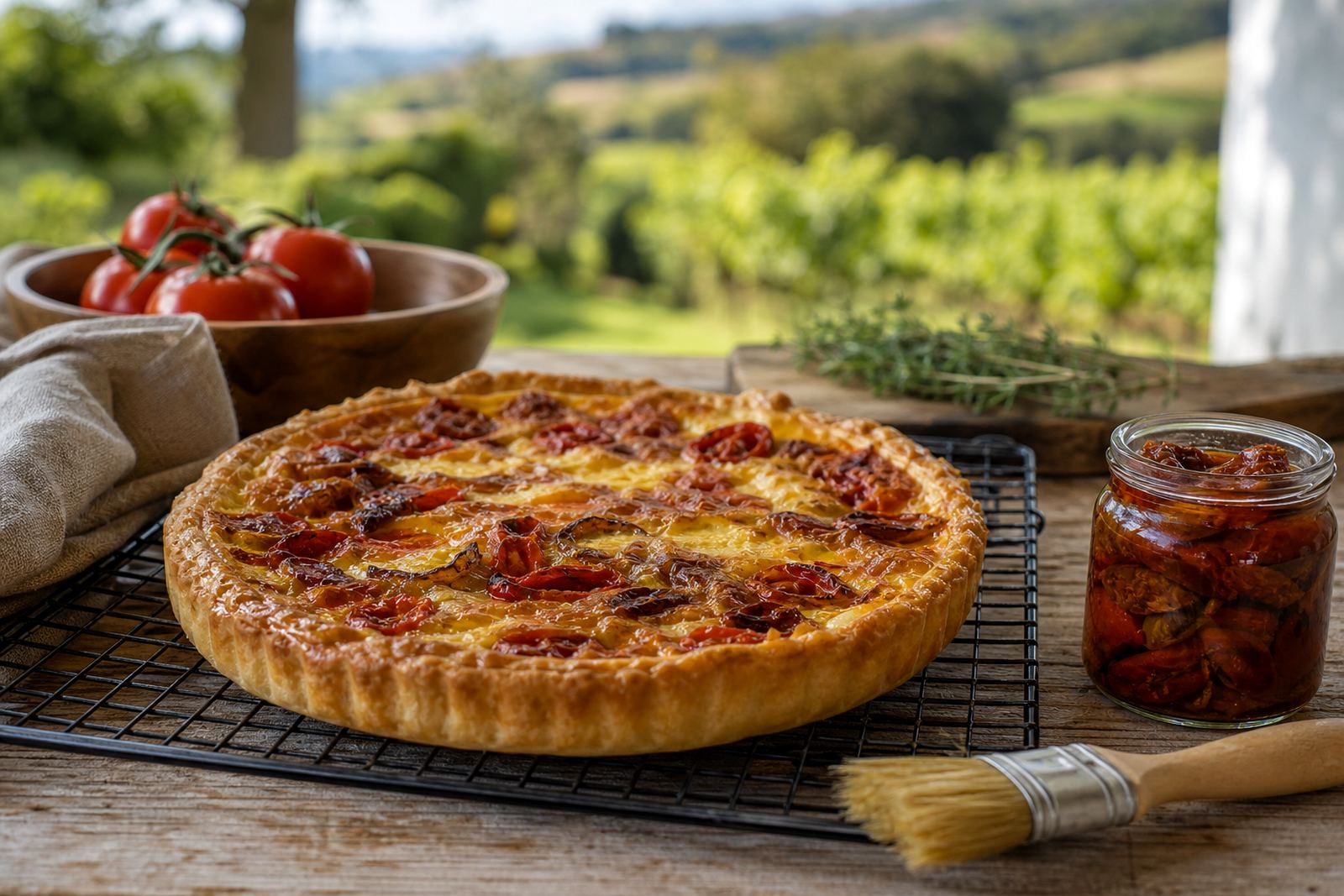
For many cooks, a savoury tart needs a centre that holds together, carries flavour and does not turn watery after baking. Sun-dried tomato preserves bring sweetness, salt and a deep tomato note, while pickles add sharpness and bite. Used together, they work well in rustic pastry bakes, open tarts and slab-style trays for lunches, buffets and family meals.
In Paarl and across the Western Cape, these bakes are popular when the weather changes and you need something that can be served warm, at room temperature or packed for a picnic. They also suit small cafés, farm stalls and home kitchens where one tart must stretch into several portions. The filling can be simple, but it still needs balance, so the preserve or pickle is not just an add-on, it becomes part of the structure.
- Use tomato preserve for a sweeter, fuller base
- Use pickle for contrast in cheese, egg and savoury vegetable fillings
- Keep the pastry crisp so the tart slices cleanly
- Plan for 8 to 12 portions from a standard tart tin, depending on depth
Choosing the right equipment for a clean bake
You do not need a complicated set-up to make a good savoury tart, but the right equipment saves time and gives better results. A loose-bottom tart tin, baking tray, rolling pin and lined chopping board are usually enough for smaller batches. For catering or hospitality supply, a larger slab tin, weighted baking paper and a sharp serrated knife help keep production moving.
If you are baking in quantity, especially during load-shedding or when the oven is shared with other items, it helps to plan around heat retention. Pastry can sit too long and soften, so it is best rolled, lined and chilled before filling. In humid coastal areas such as Cape Town or Gqeberha, an extra 10 to 15 minutes of chilling can make a difference. That small pause is often what keeps the base from becoming soggy.
- Loose-bottom tart tin or shallow oven dish
- Baking paper and dry weights, or uncooked rice
- Sharp knife for neat cutting after baking
- Small saucepan for reducing very wet fillings
- Cooling rack so steam does not collect underneath
If you are using a tray bake for event favours or corporate catering, measure your portions before you start. A standard tart tray cut into 20 small pieces is easier to manage than a free-form bake that has to be guessed at once it comes out of the oven.
Planning the filling so it does not collapse
The main mistake with savoury tart fillings is too much moisture. Tomato preserves and pickles both have strong flavour, but they should be used with restraint. If the filling is too wet, the pastry base softens and the tart loses shape. A good method is to spread a thin layer of preserve over the base, then add the main filling such as cheese, onions, spinach, roasted peppers or cooked mince. Pickles can be chopped fine and folded through so they are evenly distributed.
For wedding orders and stockist enquiries, consistency matters. Use the same tart tin, the same filling depth and the same bake time wherever possible. That makes it easier to scale from a family dinner to a bulk order. It also helps with ordering, because you can work out how many jars of preserves or pickles are needed for each 30 cm tart or each 40 x 60 cm slab.
- Spread preserves thinly, about 1 to 2 tablespoons for a medium tart
- Drain chopped pickles lightly before mixing them in
- Use cooked vegetables rather than raw, unless they are very dry
- Pre-bake pastry shells when the filling is soft or heavy
A simple egg custard can help bind the filling, but do not overdo it. Too much custard makes the tart taste more like quiche than a savoury bake. For a rustic finish, keep the top slightly uneven and let the edges brown. That gives a homemade look without extra work.
Budget ranges for home, catering and bulk orders
The cost of a baked savoury tart depends on pastry, cheese, vegetables, eggs and the amount of preserve or pickle used. For home cooking, a medium tart made with one jar of tomato preserve or one jar of pickles can usually be planned in the R90 to R180 range, depending on the other ingredients you choose. If you add mushrooms, feta, extra cheese or cured meat, the cost will move up quickly.
For small hospitality supply or café use, a tray bake that yields 12 to 20 portions often sits in the R220 to R480 range for ingredients, before labour, packaging and delivery. Event favours and corporate gifting need separate packing materials, so the total can rise further. Bulk orders for seasonal orders or subscription boxes are easier to plan when the filling is kept simple and the tart is cut into standard sizes.
- Home tart for 6 to 8 people: about R90 to R180
- Medium catering tray: about R220 to R480
- Hamper or gift box tart components: budget extra for packaging and courier handling
- Wedding or event batch: calculate per portion, then add a small allowance for breakage or trimming
Courier delivery across South Africa also needs a little planning if you are sending preserve jars with other ingredients. In Cape Town, Johannesburg, Pretoria, Durban and Gqeberha, order timing matters, especially before weekends and public holidays. It is worth matching the delivery date to your baking date so the ingredients are ready when you need them, not sitting in the kitchen for too long.
How to lay out tart production in a busy kitchen
A good production layout keeps savoury tarts moving. Start with pastry, then fillings, then assembly, then baking, cooling and packing. If you are making several tarts for hospitality supply or a function, line up each stage in the same order every time. That reduces mistakes and makes it easier for the whole team to work together.
In a busy kitchen, assign the jobs clearly. One person can roll and line the pastry, another can mix the filling, and another can check bake times and label the finished trays. That is especially useful when you are preparing for a wedding order or a custom hamper pack where timing is tight. A simple written plan saves you from forgetting a tray in the oven or overfilling a shell by accident.
- Prepare pastry first and chill it before filling
- Keep preserves and pickles measured in small bowls
- Use one marked spoon or ladle for each batch
- Cool tarts before cutting so the filling settles
If your oven runs hot, rotate trays halfway through baking. If it runs unevenly, move the tart to the lower shelf for the last few minutes so the base cooks through. Small adjustments matter, especially when you need the tart to leave the kitchen looking tidy and holding its shape. It is the kind of detail that makes a plain bake feel properly finished.
Common mistakes that spoil the result
The most common mistake is using too much preserve or too many pickles in one tart. Strong flavour is good, but it can overpower the rest of the filling. Another mistake is pouring a wet mixture into raw pastry and hoping the oven will sort it out. It usually will not. The shell needs some support before the filling goes in, especially for larger tarts and slab bakes.
Some cooks also skip the cooling stage. A tart cut too soon will collapse, and the slices will look rough. Give it 15 to 20 minutes on a rack if you want proper pieces for serving. When the tart is being packed for delivery or a buffet, that cooling time is not optional, it is part of the job.
- Do not overfill the shell
- Do not use very wet vegetables straight from the pan
- Do not slice while piping hot
- Do not forget to season the base layers as well as the top
For home cooks, the best test is simple: the base should be cooked, the top should be lightly browned, and the filling should hold when cut. If you can lift a slice with a spatula and it keeps its shape, you have done the hard part well.
Ordering preserve and pickle for your tart menu
Cumato supplies sun-dried tomato and pickle preserves from local farm produce in Paarl, with courier delivery across South Africa. That makes it easier to plan for baked savoury tarts when you are cooking for a family table, a café counter, a gifting season or a larger event. Orders can be used for online orders, nationwide courier, gift boxes, custom hampers, event favours, corporate gifting, bulk orders, stockist enquiries, seasonal orders, subscription boxes, wedding orders and hospitality supply.
Clients reach us through the enquiry form on our contact page. If you are planning tart production for Stellenbosch, Somerset West or further afield, it helps to list the number of tarts, the portion size and the delivery window before you send your enquiry. That way the order can be matched to your kitchen schedule and your packaging needs without last minute chasing. Good planning saves time and keeps the baking calm, even when the order is big.
For tart filling, the best preserves are the ones that add flavour without making the pastry struggle. That is where tomato preserve and pickles both earn their place, each in its own way. Used with care, they turn a standard savoury bake into something worth repeating.