
Why Preserves Work So Well On Event Tables
When you are setting up for a wedding, birthday, year-end function or small corporate event, you need food that holds up well over time and still looks inviting after the first rush. Sun-dried tomato and pickle preserves are useful because they bring strong flavour in a small spoonful, and they work with both warm and cold dishes. That makes them handy for buffets where guests serve themselves over a long period.
In practical terms, a good preserve can help round out a table without adding more cooking steps at service time. It can sit beside cold meats, cheese platters, roast chicken, bread baskets and savoury pastries. In Paarl and the surrounding Winelands, where many events are held in halls, farms and guest venues, caterers often need items that can be plated in advance and topped up quickly. A jar of something well made does exactly that.
It also gives guests a simple choice. Some people want a little sharpness with rich food, others want a sweet-savoury note next to cheese or crackers. You do not need a complicated menu to make that happen, just a few reliable jars and a clear serving plan.
Buffet Ideas That Keep Service Moving
Buffets work best when each item has a clear purpose. Preserves can be used as part of the main spread, or as a small station near breads and cold dishes. The aim is to keep the queue moving while still offering variety. If you are catering for 40 or 400, the same principle applies: keep the portions manageable and the labels clear.
- Serve sun-dried tomato preserve in a small bowl beside focaccia, breadsticks or plain rolls.
- Place pickle preserve next to roast meats, chicken pie or savoury tarts for a bright contrast.
- Use a spooned layer in sliders or mini rolls so guests can build their own bites quickly.
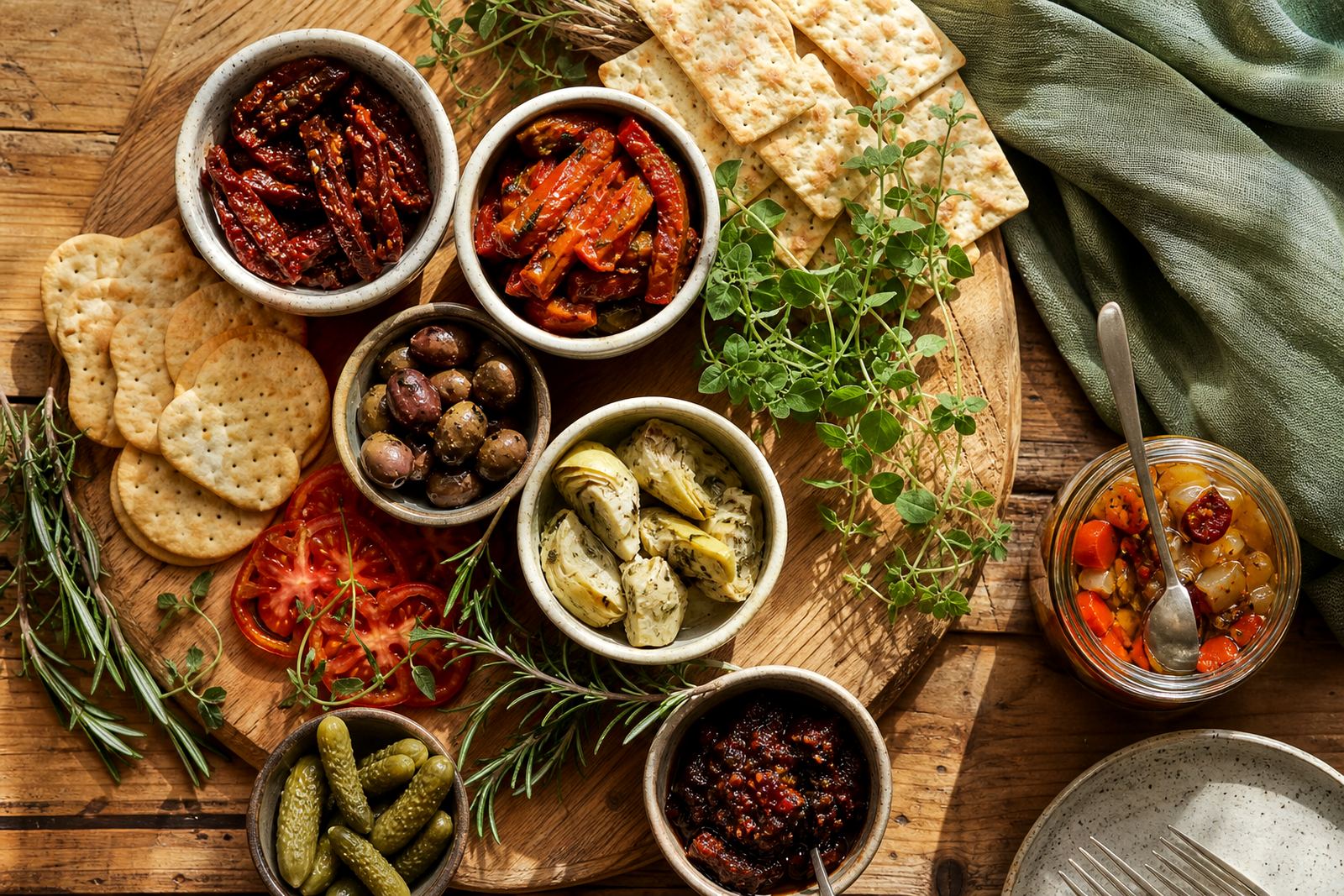
- Add a small ramekin to a cheese board instead of extra sauces that may run or split.
- Mix a little preserve through soft cheese or cream cheese for a fast spread at self-service tables.
For open service, think about utensil control. Use separate spoons and keep the jars or bowls topped up in smaller amounts so the table stays neat. In hot weather, especially in Durban or coastal venues, smaller refills are easier to manage than placing out too much at once.
Canapés That Need Very Little Assembly
Canapés are where preserves earn their keep. A small amount can turn a plain base into something with more character, without extra frying or last-minute garnishing. That matters when you are working with tight serving windows, staff are moving fast and guests arrive all at once.
Try sun-dried tomato preserve on crostini with cream cheese and a few herbs, or spoon a little over grilled halloumi on toasted rounds. Pickle preserve can sit neatly on savoury crackers with sliced chicken, cold roast beef or a simple egg filling. If you are doing passed canapés, keepsakes like these are easy for staff to hold on trays and hand out cleanly.
At a function in Stellenbosch, for example, a reception table can carry a mix of breads, cheeses and bite-sized pastries before dinner service starts. A tomato preserve gives one corner of the table a richer note, while a pickle preserve can lift the more savoury items. That small contrast helps the table feel considered without making the prep too fussy.
Self-Serve Tables For Weddings And Corporate Events
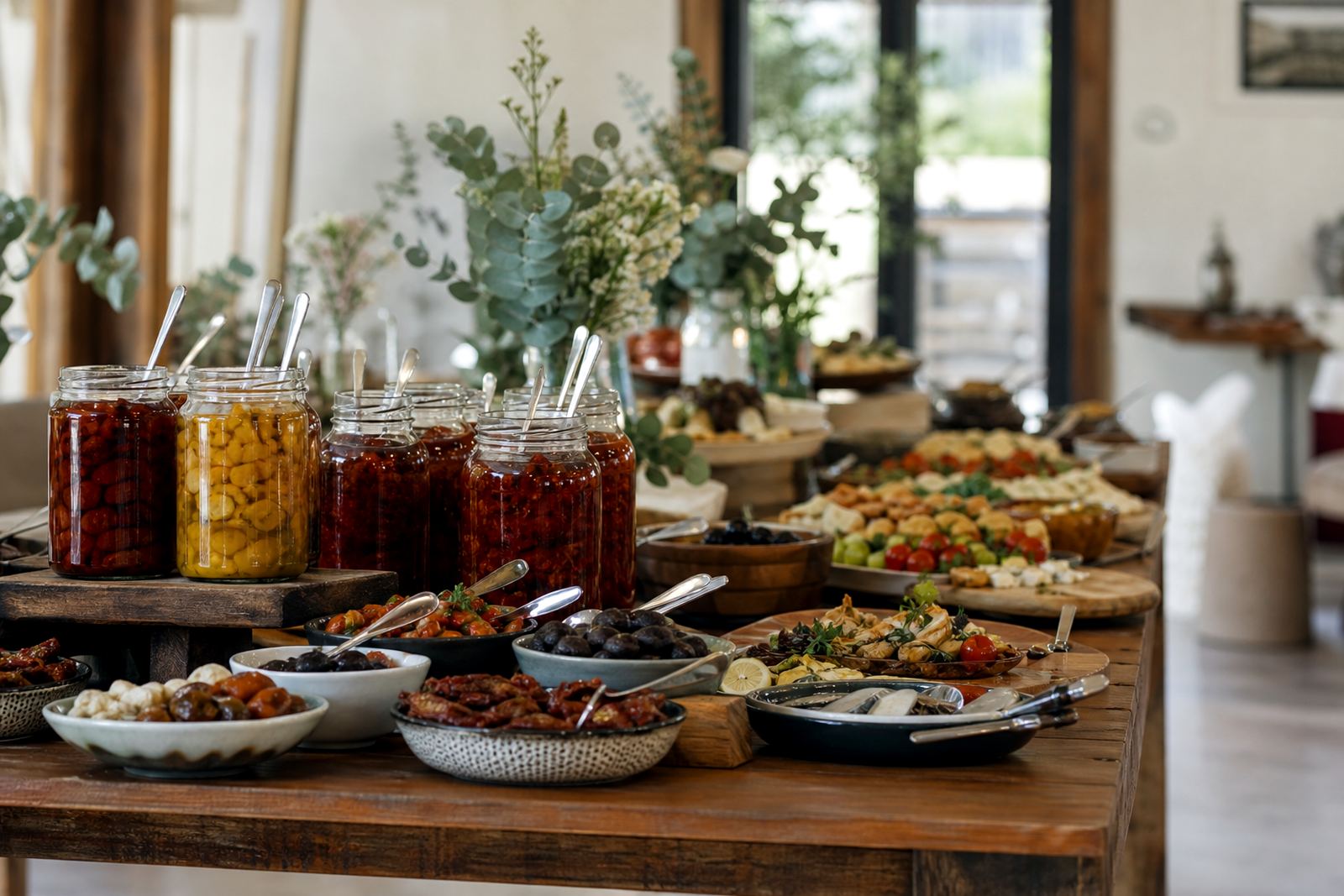
Self-serve tables are common at South African functions because they keep service simple and let guests choose what suits them. The key is not to overload the table. A few jars, clearly labelled, can do more work than many separate condiments. That is useful for wedding spreads, office lunches and hospitality setups where staff need to keep things orderly.
For wedding orders, a preserve station can be placed near cheese, crackers and small bread rolls during pre-drinks. For corporate gifting or event favours, small jars can also be used as part of the table décor if the labels are clean and the lids are tidy. Just make sure the serving area has enough space so people are not reaching across one another.
- Use low bowls or jars so guests can see what is inside at a glance.
- Label each item plainly if you are offering more than one flavour.
- Keep napkins and small serving spoons at the table edge.
- Position the station away from direct sun, especially at outdoor venues.
- Have a backup tray ready for quick restocking during peak service.
If your event is on a farm outside Paarl or in a hall in Somerset West, plan for temperature changes as well. Shaded placement and sensible serving quantities help the table stay presentable from the first guest to the last. Small details make a big difference when people are moving through the space all evening.
Using Preserves With Local South African Menus
Preserves fit naturally into local menus because they work with ingredients people already enjoy. A platter of boerewors rolls can take a spoon of pickle preserve for extra bite. Roast chicken trays can be served with tomato preserve on the side. Even simple potato salad or couscous can be paired with a savoury preserve so the meal does not feel flat.
For hospitality supply, this is useful because kitchen teams want items that can be used in more than one way. One jar can support breakfast service, lunch platters and evening snacks. That kind of flexibility matters when you are planning a full event schedule or managing stock for a guesthouse or conference venue.
It also keeps local flavour front and centre. When the ingredients are sourced from South African farms, the result feels appropriate for a local gathering. Guests recognise the taste and it suits the kind of food people expect at family events, school functions and seasonal celebrations.
Planning Quantities And Storage Before The Event
Good event planning starts with the practical side. Think about how many guests you are feeding, how long the table will be active and whether the preserve is going onto breads, cheeses or hot food. For smaller events, a few jars may be enough. For larger functions, it helps to portion into smaller serving dishes so the table stays clean and fresh.
Store jars in a cool, dry place before the event and open them as close to service as possible. If you are moving stock between venues in Cape Town, Johannesburg, Pretoria, Durban or Gqeberha, pack them securely so lids stay tight and labels remain readable. Courier delivery across South Africa also makes it easier to plan ahead for seasonal orders and bulk orders without last-minute stress.
When the food is ready, use the preserve where it will do the most good. A little spread on a canapé, a spoon beside a roast, or a small bowl at a self-serve station can take a straightforward menu and make it feel better considered. That is the real value of sharing jars at events: less fuss, better flow and food that gets used well.