
Start With the Jars, Not the Board
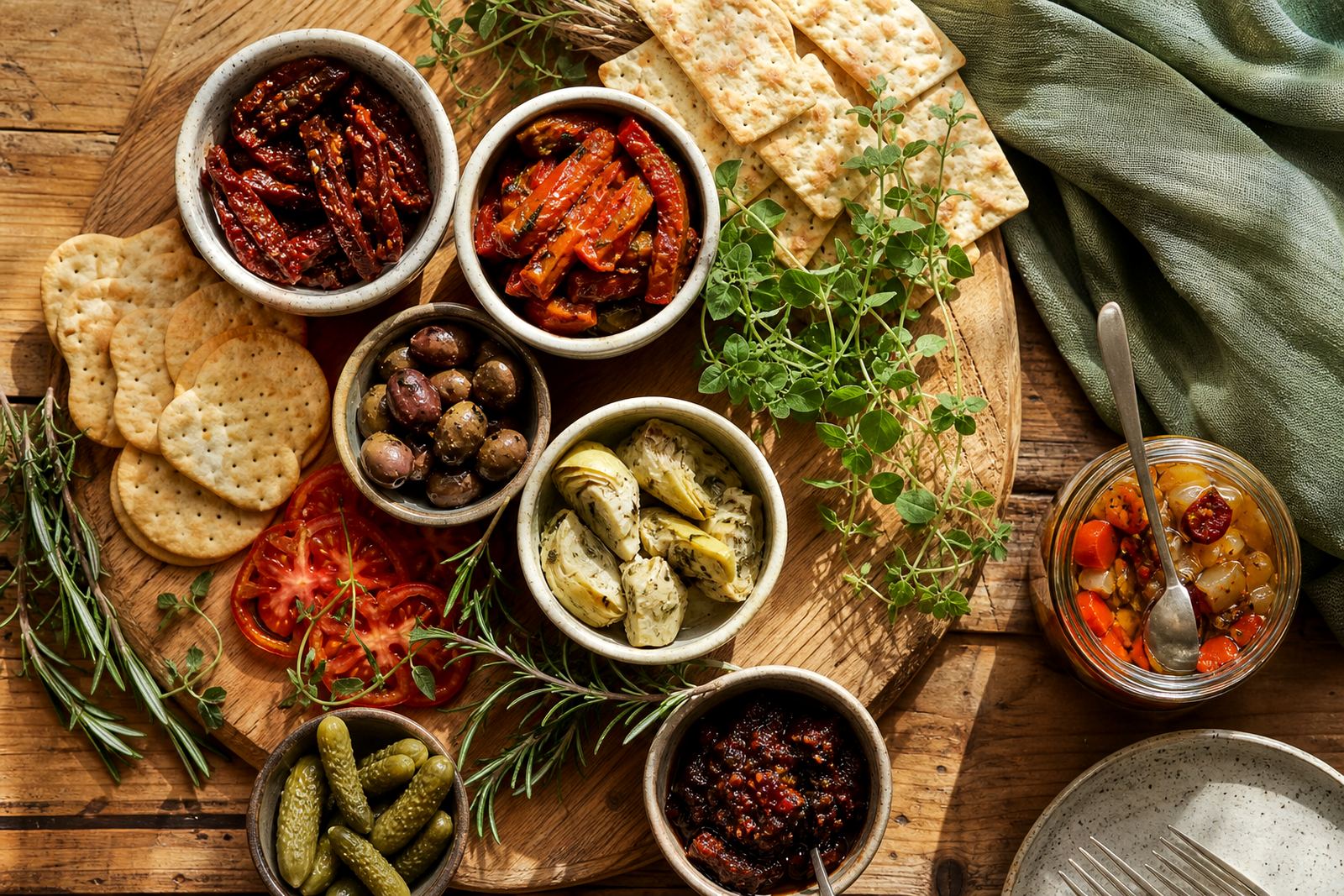
A good jar board begins with the jars themselves. Sun-dried tomato preserves, pickles and other savoury jarred items give you strong colour and shape straight away, so place those first and let the rest of the board follow. Think of the jars as your anchors. Once they are set, the smaller pieces can fill the gaps around them.
Use jars of different heights if you have them, but keep the visual line tidy. A short jar beside a taller one looks more natural than three identical containers in a row. If the board will sit out for a while, choose jars with tight lids and spoon out only what you need into small bowls so the display stays neat.
- Place the boldest jar in the centre or slightly off centre.
- Group jars in odd numbers for a more relaxed look.
- Leave enough space to reach in with tongs or a spoon.
Build Colour Around the Ingredients
Jar boards work best when the colour range feels deliberate. Deep red tomatoes, green pickles, pale crackers and golden breadsticks already do most of the work for you. Add olives, cheese, fresh herbs or sliced peppers if you want more contrast, but keep the palette controlled so the board does not look crowded.
When styling for a braai in Paarl or a relaxed lunch in Stellenbosch, I like to include at least one bright element and one muted element. That way the board feels lively without shouting. A good rule is to repeat each main colour at least twice across the board. It makes the eye move naturally from one side to the other.
- Use fresh parsley, dill or basil for a green finish.
- Repeat red, green and neutral tones across the board.
- Keep very colourful extras to one or two items only.
Choose Serving Pieces That Make Scooping Easy
Pretty boards still need to work at the table. Small bowls, ramekins and shallow dishes help keep wet or oily preserves from running into the dry items. Wooden spoons, small forks and cheese knives also make the board easier to use, especially when guests are standing and chatting. If you are serving at a birthday or office function, make sure every jar has its own spoon. It saves time and keeps things tidy.
Mix textures too. A smooth ceramic bowl next to a rough wooden board gives the arrangement more depth. If you are using a long board or tray, place the jars slightly off centre and let the serving pieces form a loose frame around them. That simple shift makes the whole spread feel less flat.
- Use shallow bowls for pickles and relishes.
- Keep spoons short enough to stay stable in the jar.
- Match the board size to the number of guests, not the other way round.
Balance Crunch, Softness and Bite
A jar board is more satisfying when it offers different textures. The jars bring tang and richness, but the rest of the board should carry crunch, softness and a bit of freshness. Crackers, seeded bread, roasted nuts, sliced cucumbers and cheese cubes all help the board feel complete. If the preserve is strong in flavour, use plain carriers beside it so the taste does not become too busy.
For a local example, imagine a Sunday lunch in Somerset West with family arriving early. You could set out sun-dried tomato preserves with plain crostini, dill pickles with sliced biltong or cold meats, and a small bowl of marinated peppers. That combination is easy to serve, looks good on a big table and gives people options without extra fuss.
- Pair sharp preserves with plain breads or crackers.
- Add at least one soft item like cheese or folded flatbread.
- Include one crunchy component so the board does not feel heavy.
Style for the Season and the Occasion
The same jars can be styled very differently depending on the event. For a Christmas gift table, use a wooden tray, red napkins and a few sprigs of rosemary. For a wedding order or engagement brunch, keep the look lighter with white serving bowls, pale crackers and small labels. For corporate gifting or hospitality supply, neatness matters most, so keep the jars aligned and avoid too many decorative extras.
Seasonal styling also helps when you are planning around local produce. In summer, bring in fresh herbs, tomatoes and cucumbers. In cooler months, use olives, roasted peppers and firmer cheeses. Around load-shedding schedules, it helps to prepare what you can in advance, then assemble the board just before serving so the colours stay crisp and the bread does not dry out.
- Use warm colours for winter gatherings and lighter tones for summer.
- Keep corporate boards simple and easy to restock.
- Prepare wet and dry items separately until serving time.
Simple Layouts That Work Every Time
If you are unsure where to begin, start with a basic layout and build from there. A narrow board suits a kitchen counter or apartment balcony. A round board works well for two to four people. A large rectangular board is better for events where guests gather in waves. The trick is to keep the jars near the centre and then flow outward with bread, fruit and small savoury pieces.
Do not overfill the surface. A board that has a little breathing room usually looks better than one packed edge to edge. Leave a few gaps so the jars stand out and the serving pieces can be reached without moving everything around. That small bit of space gives the display a calmer, more finished look.
- Round boards suit intimate tastings.
- Long boards suit grazing tables and group events.
- Leave open space so guests can serve themselves comfortably.
Make It Easy to Recreate at Home
Jar board styling should feel practical enough for a weekday supper and neat enough for guests. Keep a few staples on hand, then add one or two special items from the jar cupboard when you want to make things feel thoughtful. A good board can come together in ten minutes if the jars are already chosen and the other items are prepped.
For home cooks in Cape Town, Johannesburg or Gqeberha, the same idea works whether you are hosting a book club, sending out a small gift box or setting up a family table for the weekend. Choose jars with strong colour, set them where they can be reached easily and keep the rest of the board simple. That is usually enough to make the spread look put together without turning dinner into a project.
- Keep a few crackers, breads and cheeses ready in the fridge or pantry.
- Use one or two jar flavours as the main feature.
- Assemble close to serving time for the best presentation.