
Start with foods that travel neatly
Picnic food should be easy to pack, easy to eat and able to sit in a cool box or basket for a few hours without fuss. That is why jars of sun-dried tomato preserves and pickles work so well. They stay contained, bring strong flavour, and let you build a picnic around simple breads, crackers and small bites.
Think about texture before you pack. A picnic is not the place for anything that needs careful plating or constant heating. Choose items that can be eaten at room temperature, sliced quickly or spooned straight onto bread. In Paarl, where families often head out to vineyards, river spots or the mountain side, the best picnic bags are the ones that open up to a ready meal, not a project.
Use jars as the flavour anchor
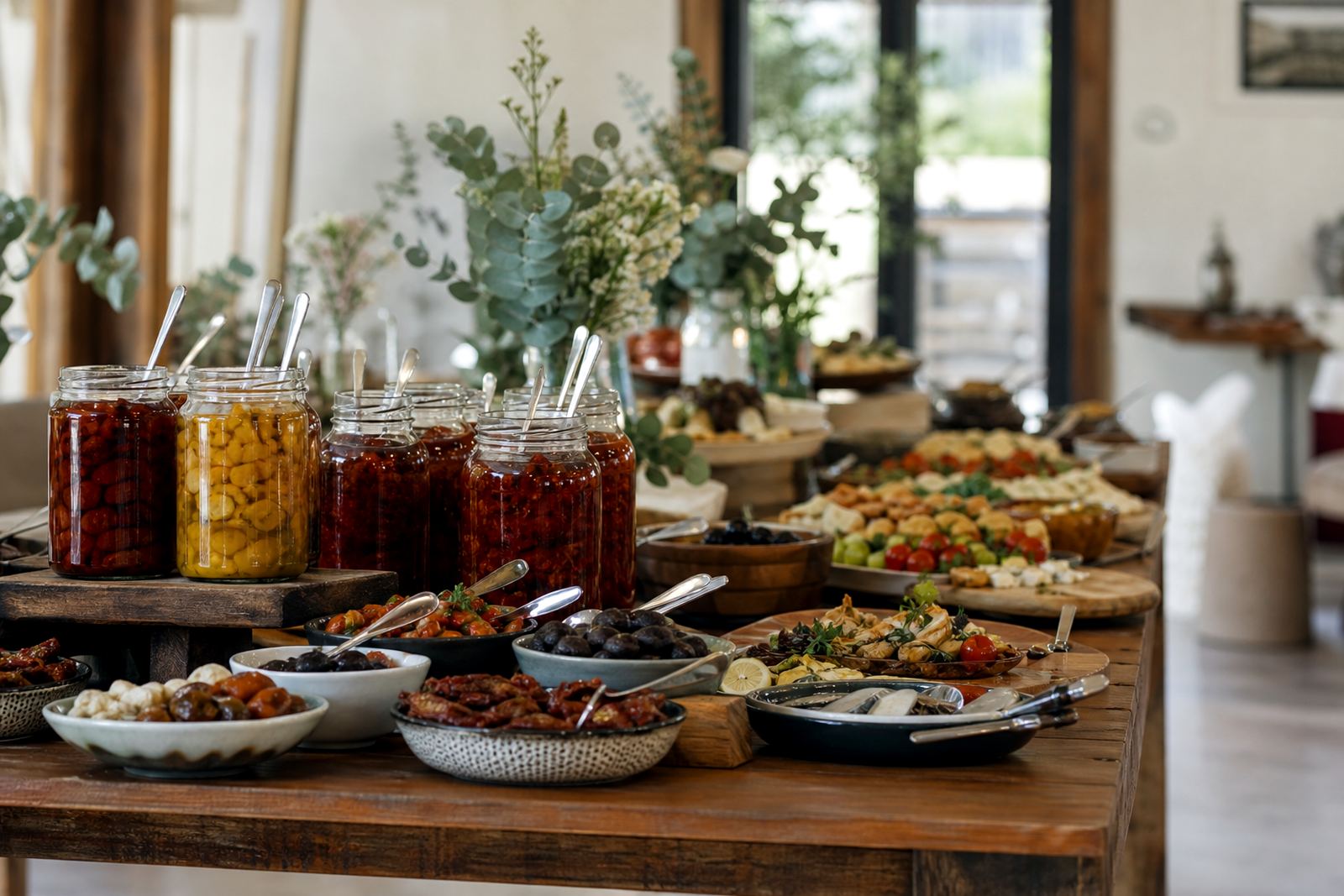
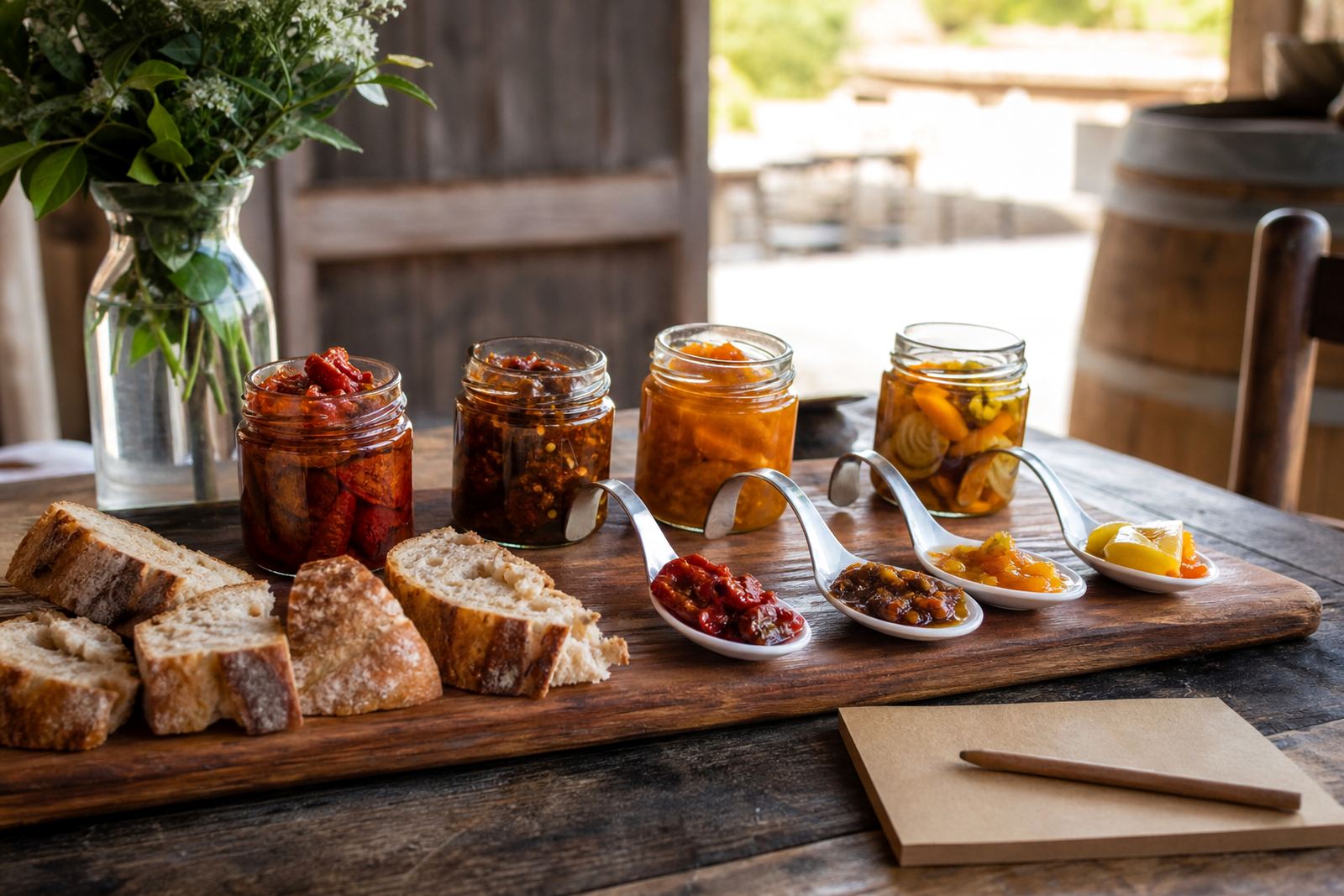
Jars make sense for outdoor eating because they hold flavour in one place. A spoonful of sun-dried tomato preserve can lift plain baguette slices, savoury biscuits, boiled eggs or a simple pasta salad. Pickle preserves work well with cold meats, cheese cubes, roast chicken leftovers and sliced cucumber. Keep the jar upright in a snug container so it does not knock against other items.
If you are packing for a longer outing, separate the wetter foods from the dry ones. A jam jar with a tight lid is useful for sauces, dressings and spoonable toppings, while smaller containers are better for olives, sliced cheese or chopped peppers. It is worth checking the lid before you leave, and packing a small cloth for sticky fingers.
- Choose jars with screw tops that close firmly.
- Wrap each jar in a tea towel or cloth napkin.
- Place jars at the bottom of the cooler or basket.
- Keep oily or briny items in one section so they do not mark bread.
Pick breads that stay good without heating
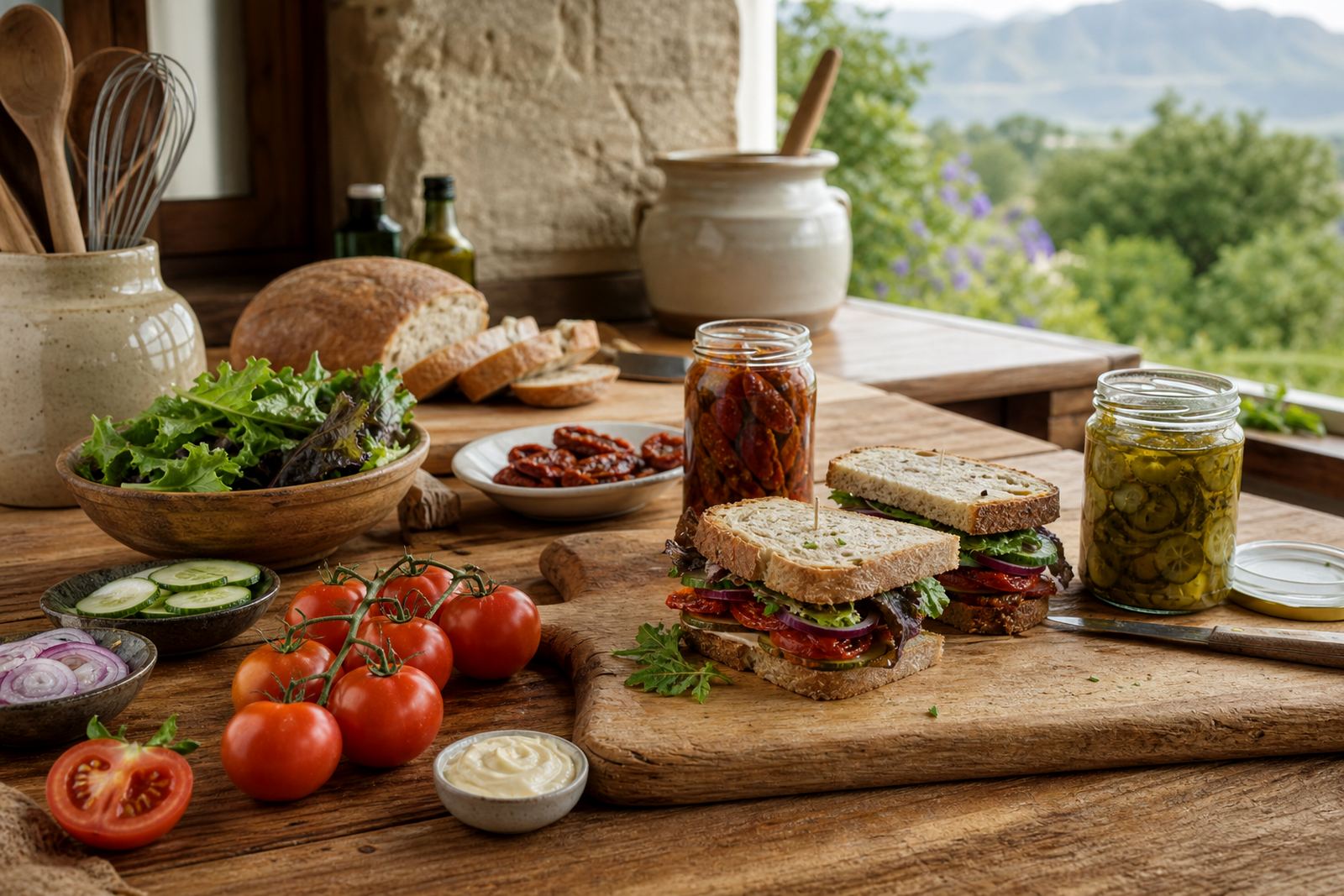
Good picnic bread should hold its shape, slice cleanly and still taste pleasant after an hour in the bag. Crusty loaves, seeded rolls, flatbreads and rusks all travel better than very soft bread that squashes easily. If you are making sandwiches, assemble them close to departure time and keep the fillings dry. Wet tomato slices and heavy dressings can turn bread limp before lunch.
For a simple spread, pack one loaf, one cracker option and one soft bread option. That gives everyone choice without overfilling the basket. In coastal towns like Gqeberha or Durban, where humidity can soften bread quickly, keep the bread wrapped in a paper bag first and then in a cloth or airtight box. It helps the crust stay a bit firmer and reduces condensation.
- Baguette slices for dipping and topping.
- Seeded crackers for cheese and pickle preserves.
- Flatbread for wraps and quick fold-over bites.
- Rusk-style savoury crackers for longer outings.
Build a picnic menu around simple pairings
The easiest picnic menu is one where every item has a purpose. You do not need a long list, just a few foods that work together. Sun-dried tomato preserve can sit beside goat's cheese, cream cheese, sliced chicken, roasted peppers and basil leaves. Pickle preserves pair nicely with cheddar, cold meat, boiled eggs and savoury biscuits. If you are feeding children, keep one section plain and one section more punchy for the adults.
A well-packed basket should feel balanced. Include something salty, something fresh, something crunchy and something a little sweet if the setting calls for it. For a Sunday outing near the Berg River or a family gathering in Stellenbosch, a small board with bread, cheese, fruit and a couple of jars can be enough. No need to overpack when the aim is relaxed eating outdoors.
- Cheese, crackers and sun-dried tomato preserve.
- Boiled eggs, cucumber sticks and pickle preserve.
- Cold chicken, rolls and a spoonable tomato topping.
- Fruit, nuts and one small sweet item for the end.
Keep the cool box organised from the start
Cold food packs better when you think in layers. Put the heaviest items at the bottom, then the containers that need to stay cold, and finally the bread and lighter snacks on top. If you are using a cooler box, add ice packs between the layers so the temperature stays more even. Avoid opening it too often while you are on the road, especially on hot Western Cape afternoons.
Pack separate serving tools for each jar or container. A small spoon, butter knife and tongs save time once everyone is hungry. You can also use reusable containers for napkins, toothpicks and serving pieces so everything stays tidy. Keep wet wipes or a damp cloth close by, because once one jar is open people will start helping themselves quickly.
- Place ice packs along the sides and on top.
- Keep bread in a dry container away from chilled items.
- Use one serving spoon per jar to avoid mixing flavours.
- Store napkins and cutlery in a separate pouch.
Choose packaging that suits the outing
Not every picnic needs the same setup. A short beach lunch in Cape Town calls for compact containers, easy-clean lids and fewer glass items. A longer farm picnic outside Paarl can handle a larger basket with more serving pieces and a bigger spread. If you are going to a public park, keep the packaging neat and easy to carry, because many municipal spaces ask visitors to pack out waste and leave the area clean.
Reusable containers are practical, but glass jars can still work well if they are packed carefully. Use a basket with a flat base or a cooler bag with structure so the jars do not tip. If you are including gift-style items for a birthday picnic or corporate outing, keep everything labelled by category. That makes serving easier and stops one jar from being opened too soon.
A Paarl picnic example that keeps things easy
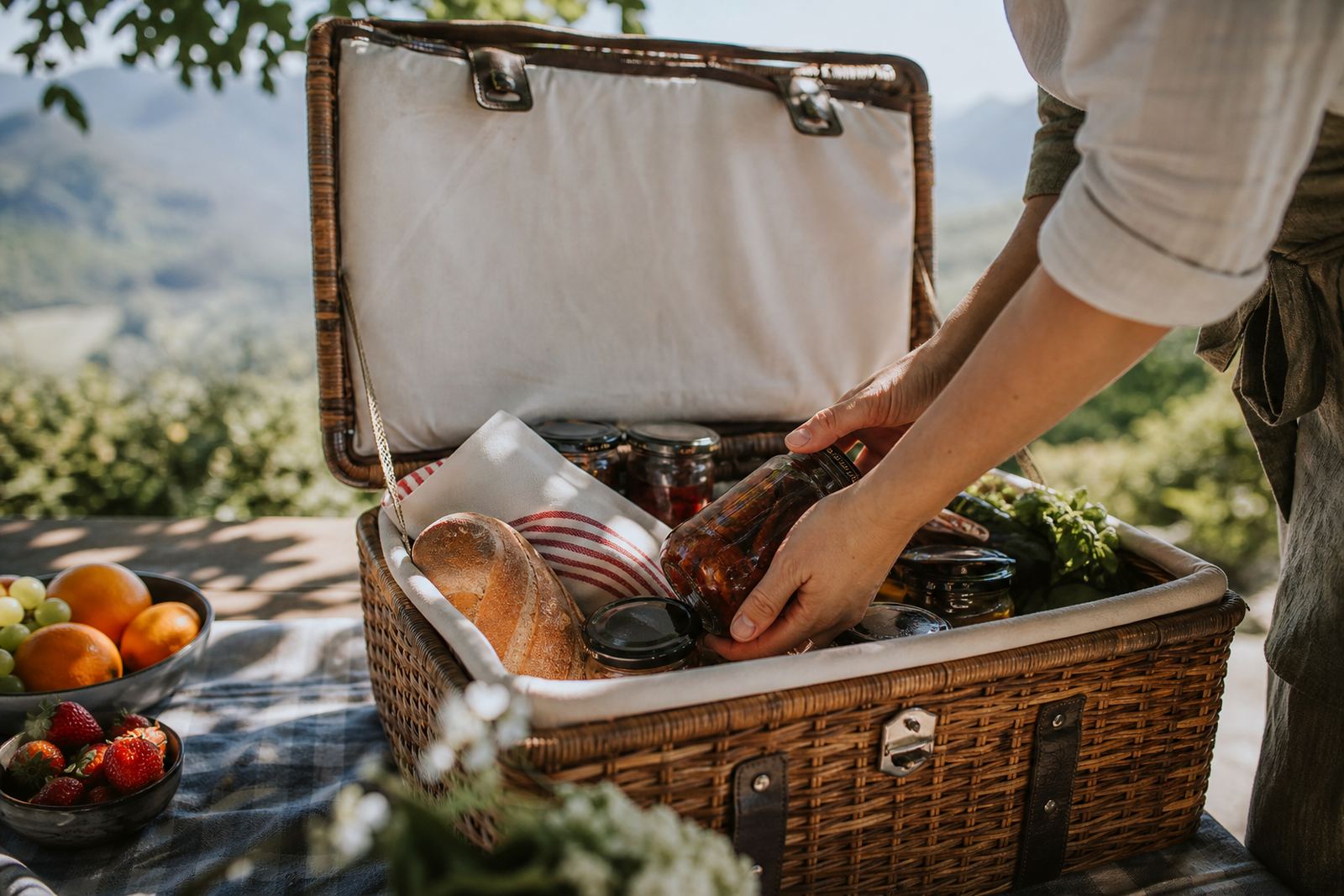
Picture a Saturday picnic in Paarl with a view of the vineyards and the wind picking up after lunch. You pack a cloth-lined basket with one jar of sun-dried tomato preserve, one jar of pickles, a small block of cheddar, a loaf of crusty bread, seeded crackers, grapes and a few boiled eggs. Everything is chosen because it can be eaten without heating and without much mess.
At the park, the food comes out quickly. The bread is sliced, the jars are opened, and everyone builds their own bite with no rush. That is the real trick to picnic packing. Keep it simple, keep it contained, and choose flavourful items that travel well from the kitchen to the grass. A little planning is enough to make the meal feel easy.