
Start With The Jar, Not The Spoon
Before you taste, look at the preserve in the jar. Sun-dried tomato preserves should show a deep red colour, with oil, syrup or brine holding the pieces together. Pickles should look crisp in shape, with enough liquid to coat the vegetables without drowning them. That first glance tells you a lot about how the preserve will behave on food.
Give the jar a gentle turn and notice whether the pieces move easily or stay compact. Thicker preserves tend to sit well on crackers and sandwiches, while looser ones work better stirred through pasta, spooned over roast vegetables or served next to grilled chicken. If the jar has been standing in a cool pantry in Paarl, let it sit at room temperature for a short while before tasting so the flavour opens up properly.
Open the lid and take in the smell before you take a bite. You may notice tomato sweetness, vinegar sharpness, spice, garlic or herb notes. Good tasting starts with smell because it gives your mouth a heads-up, and that is often where the small details show first.
Taste In Small Amounts And Give It Time
Use a clean spoon and take a small bite first. Let it sit on your tongue for a few seconds before chewing. Many people rush this part, but preserves often change from the first taste to the finish. A sun-dried tomato preserve might start sweet, then move into savoury depth. A pickle may open with acidity, then finish with a little spice or mustard note.
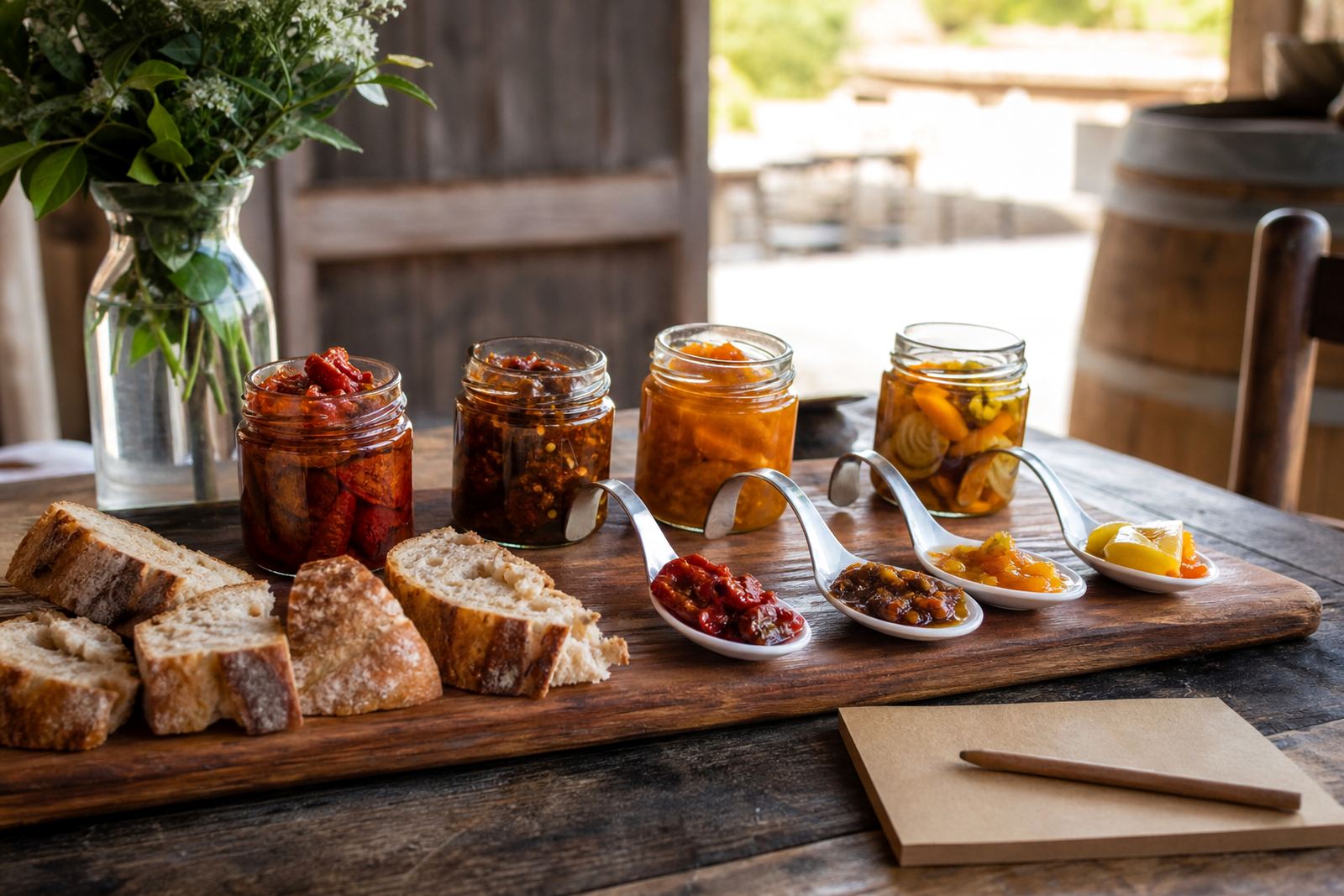
Try the same preserve in two or three small tastes. The first spoonful can be a shock if you are not used to pickled or cured flavours, while the second and third help you understand the rhythm. If you are tasting with bread, plain crackers or cheese, use the same base each time so you are comparing the preserve rather than the carrier.
A useful habit is to pause between bites and sip water. This clears your mouth and helps you judge each jar fairly. If you have three jars open at once, taste from mildest to strongest, otherwise the sharper one will overpower the rest. That can make a gentle tomato preserve seem flat when it is actually the better balanced option.
- Start with small spoonfuls, not full bites.
- Taste the same preserve more than once.
- Use water or plain bread to reset your palate.
- Move from mild to stronger flavours.
Compare Texture Before You Judge Flavour
Texture matters as much as taste, especially with preserves you want to use in everyday cooking. Some jars are chunky and chewy, some are soft and spreadable, and others keep a firmer bite. The texture tells you where the preserve belongs in the kitchen. A soft tomato preserve is easy to mix into cream cheese or yoghurt-based dips, while a firmer pickle holds up better in chopped salads and sandwiches.
Pay attention to the liquid too. If there is a lot of oil or brine, the flavour may spread more easily over food. If the preserve is tightly packed, you may want to chop it before serving. For home cooks in Durban, where warm weather can make food feel heavier, a bright pickle with a crisp bite can be a good match for cold platters. In cooler Stellenbosch kitchens, a richer tomato preserve may suit roast vegetables or eggs nicely.
The mouthfeel should not be ignored. Sticky, soft or crunchy all tell you something different. A preserve that clings to the spoon can be useful for savoury tarts. A loose, glossy preserve may be better for spooning over grilled mushrooms or folded through couscous.
Match The Preserve To Everyday Food
The easiest way to taste preserve properly is to compare it against the foods you actually eat at home. There is no need to save it for special occasions. Try a spoonful with buttered toast, fresh bread, crackers, roasted chicken, boiled eggs, cheese, vetkoek or leftover rice. That is where you learn what the jar can really do.
Sun-dried tomato preserve usually works well with creamy, neutral foods because it brings colour and depth. Pickle preserves often cut through richer foods and add lift to a plate. If you are planning a braai in Somerset West, a spoon of pickle preserve beside wors or chops can brighten the meal. If you are making a quick lunch in Pretoria, a tomato preserve stirred into mayonnaise makes a simple sandwich feel more considered.
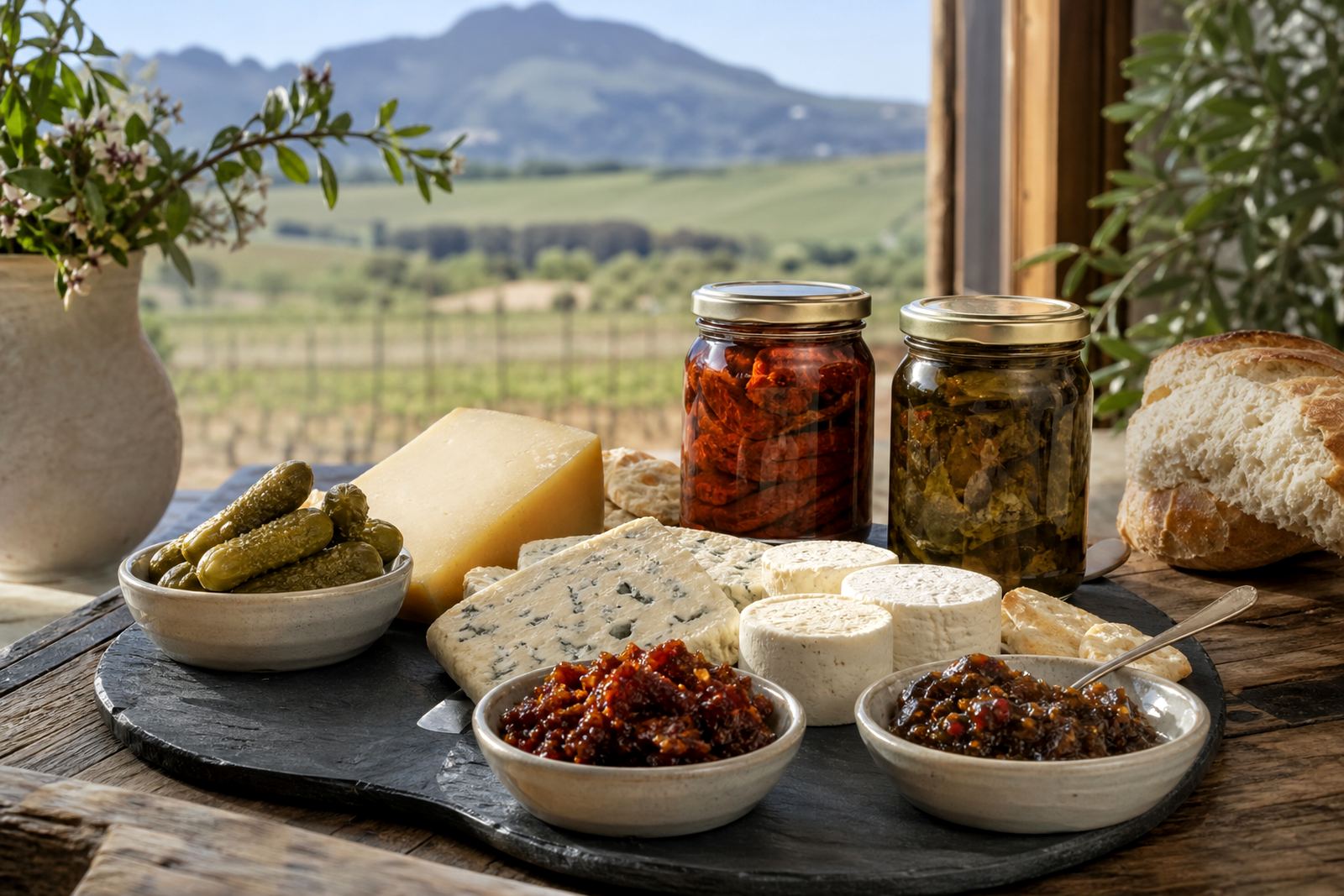
- With cheese: look for balance between salt and sweetness.
- With eggs: notice whether the preserve adds freshness or warmth.
- With grilled meat: test whether it cuts through richness.
- With bread: check how easily it spreads without breaking the slice.
Once you start matching jars to foods, you will notice which preserve you reach for most often. That is usually the one that earns its place in the fridge or pantry.
Use A Local Table As Your Testing Ground
A practical tasting table does not need to be fancy. In a Paarl kitchen, set out a chopping board, a few spoons, plain bread, cheese, cucumber slices and a little leftover roast chicken. Add one tomato preserve and one pickle preserve, then compare them side by side. This gives a clear sense of how each jar behaves with both mild and strong foods.
If you are tasting for gifts, events or stockist selection, keep the setting simple and repeatable. Use the same bread, the same cheese and the same plate sizes. That way you are judging the preserve, not the rest of the table. It also helps when you are comparing jars for a wedding order, corporate hamper or hospitality tray, because the choice becomes practical, not guesswork.
Local cooking habits matter here. In the Western Cape, many households keep bread, eggs, cheese and leftovers close at hand, so a preserve needs to fit into that kind of everyday use. In Johannesburg or Cape Town, where lunches may be packed for work, a jar that spreads neatly and holds its flavour through the day can be the better choice.
Finish By Noting What You Would Buy Again
At the end of a tasting, ask a simple question: would you buy this jar again for your own kitchen? That keeps the decision honest. Good preserves do not just taste nice in the abstract, they solve a small food problem. They make quick meals more interesting, help with last-minute guests and give plain food a bit more character without much effort.
Write down three things after each tasting: the first flavour you noticed, the texture, and the food you would pair it with. You do not need a full tasting sheet, just a few notes so you remember the difference between jars later. A slightly messy notebook is better than forgetting which one you liked when the taste is fresh in your mind.
Once you know what you enjoy, ordering becomes simpler. Some people want a jar for weekday breakfasts, others want a mixed box for gifting, and some want bulk packs for events or hospitality. Tasting slowly helps you choose with confidence, and it means the preserve earns its place in the kitchen rather than sitting at the back of the shelf.