
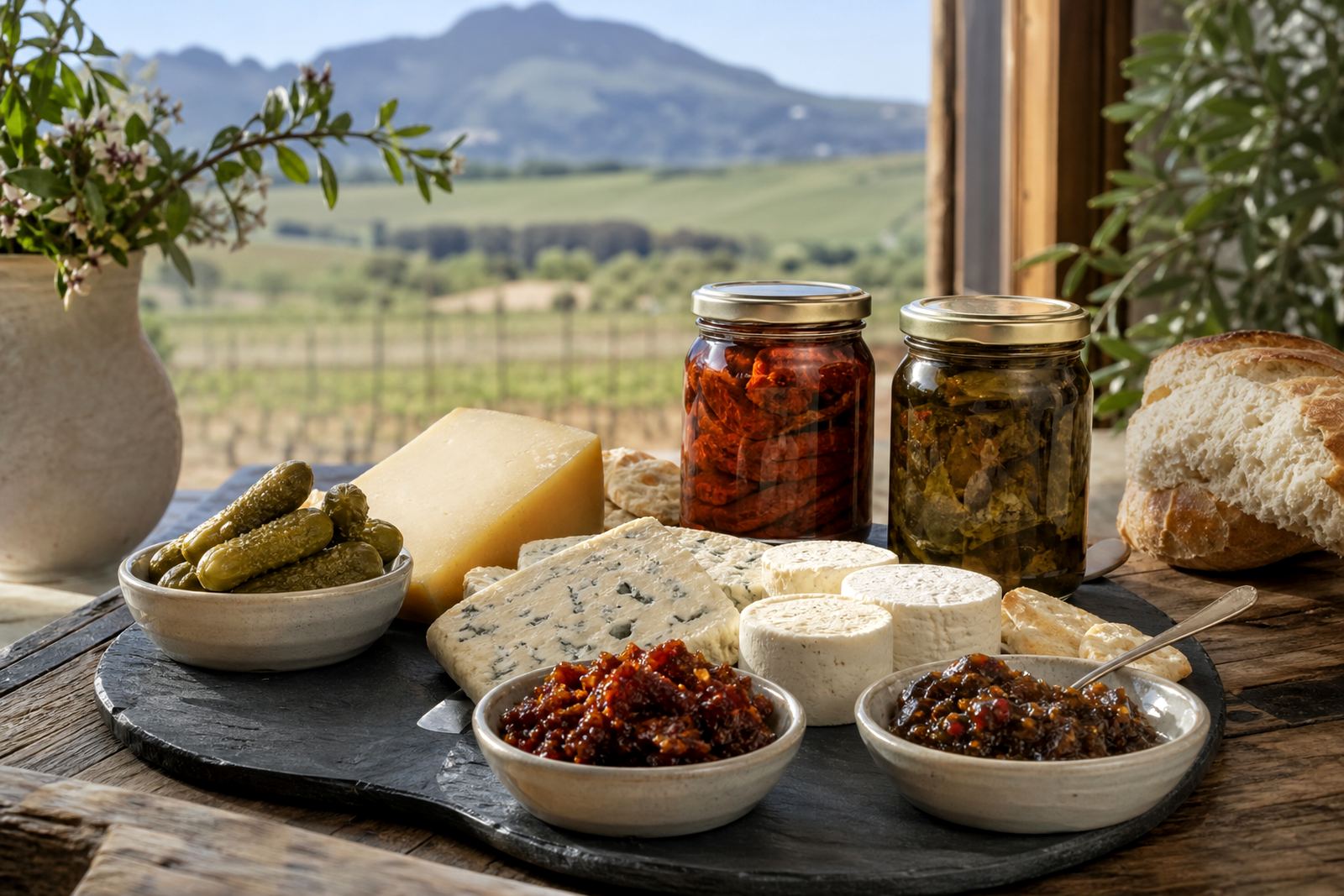
Start With the Cheese Texture
Cheese texture is the easiest place to begin because it tells you how much flavour support the preserve needs. Soft cheeses like cream cheese, goat cheese and brie can be lifted by a spoonful of sun-dried tomato preserve, while firmer cheeses such as cheddar, gouda and pecorino hold their own beside sharper pickle notes. If the cheese is mild, the preserve can lead. If the cheese is bold, the preserve should support it.
In a Paarl tasting, the most useful approach is simple: cut a small wedge, add a small amount of preserve, then taste again. You are looking for balance, not a fight on the palate. A creamy cheese will take on a richer finish, while a harder cheese often needs a brighter, more acidic preserve to wake it up.
- Soft cheeses suit smooth spreads and spoonable preserves.
- Semi-hard cheeses work well with both sweet and tangy notes.
- Hard cheeses often pair best with pickle for extra bite.
- Very mild cheeses can take stronger flavours without being overwhelmed.
Sun-Dried Tomato Preserves With Creamy Cheeses
Sun-dried tomato preserves work especially well with cheeses that have a soft centre or a spreadable texture. The tomato flavour brings a savoury depth that sits neatly against cream cheese, young goat cheese, mascarpone and brie. This kind of pairing is useful when you want a board that feels complete without needing lots of extra items.
For a quick starter, spread cream cheese on crackers and add a thin layer of sun-dried tomato preserve. If using brie, serve the preserve on the side so each guest can choose how much to add. With goat cheese, a little olive oil, black pepper and a spoonful of preserve is often enough. The preserve adds colour and a fuller taste, while the cheese keeps everything mellow.
- Cream cheese: good for canapés and sandwich filling.
- Brie: best served with a small spoonful beside the wedge.
- Goat cheese: works well on crostini, flatbread or toast.
- Mascarpone: useful when you want a softer, richer mouthfeel.
Pickle Preserves for Stronger Cheese Flavour
Pickle preserves are helpful when the cheese is aged, salty or quite full-flavoured. The sharpness from the pickle cuts through richer cheese and keeps each bite feeling lively. Cheddar, mature gouda, blue cheese and farmhouse-style cheese all benefit from a bright preserve that brings contrast rather than sweetness.
If you are serving a strong cheddar at a family lunch in Stellenbosch or Somerset West, pickle preserves can stop the board from feeling heavy. The same applies to a blue cheese plate where a little sweetness or tang gives shape to the flavour. Try a small amount first because some cheeses need only a hint. Too much pickle can flatten the cheese instead of improving it.
- Mature cheddar: pairs neatly with tangy pickle and plain crackers.
- Gouda: works well with pickle and fresh apple slices.
- Blue cheese: use pickle sparingly to balance the saltiness.
- Farmhouse cheese: good for sturdy bread and chutney-style serving.
How to Build a Cheese Board for Guests
A good cheese board does not need many ingredients, just a sensible mix of textures and flavours. For a small gathering, choose three cheeses, two preserves and one plain base such as water biscuits, toast points or sliced baguette. One preserve should lean sweet or savoury, the other should lean tangy. That gives guests options without cluttering the table.
In coastal places like Cape Town and Gqeberha, cheese can soften quickly if left in heat, so it helps to bring the board out close to serving time. In hotter inland areas like Pretoria or Johannesburg, keep the cheese chilled until just before guests arrive. A shallow bowl for preserves works better than a deep jar on the table, because people can spoon out small amounts more neatly.
- Use one soft cheese, one semi-hard cheese and one strong cheese.
- Include both a tomato preserve and a pickle preserve.
- Keep crackers and bread plain so the cheese stays the main flavour.
- Serve small portions and refill as needed.
Local Serving Ideas for South African Kitchens
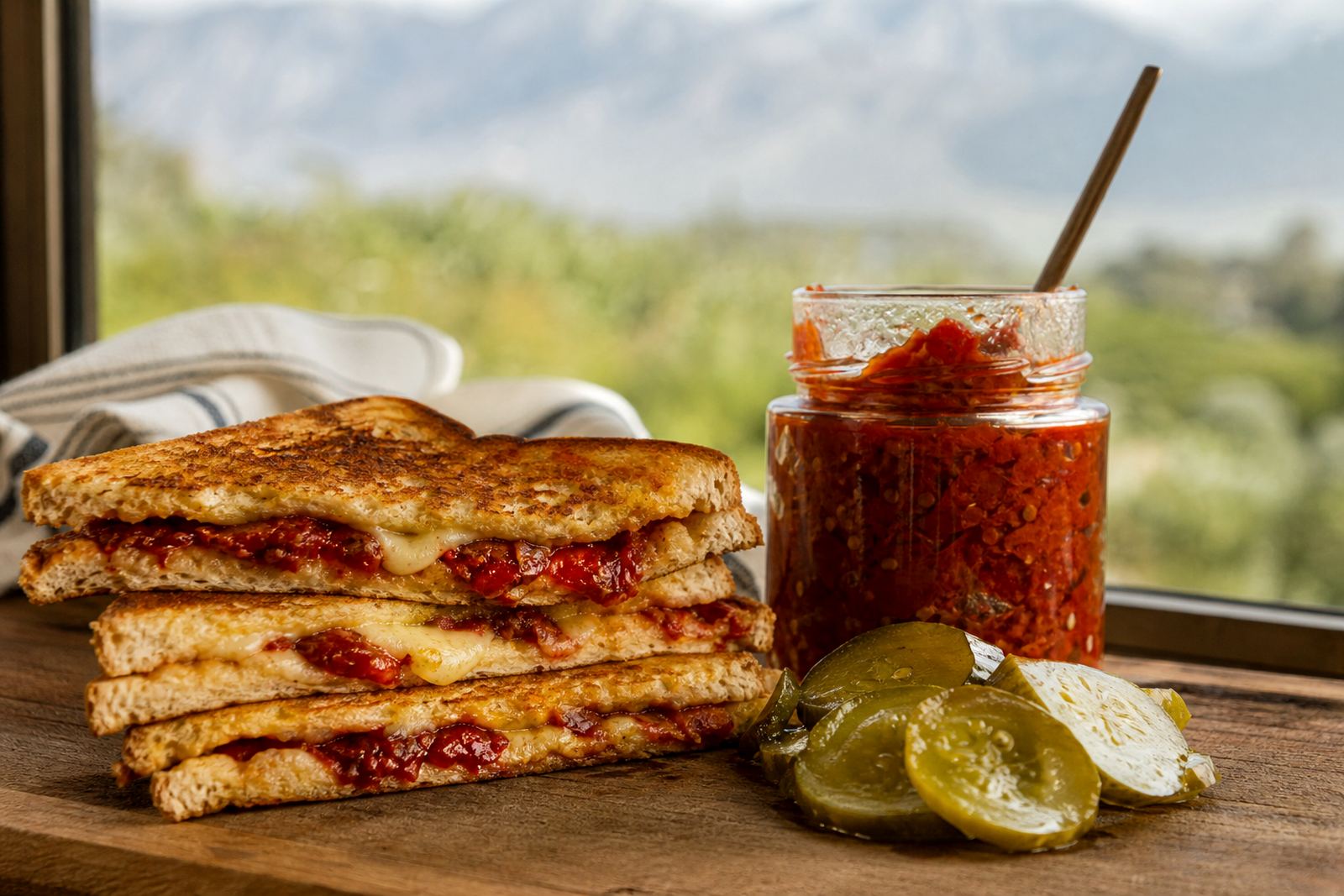
These pairings are easy to use in real kitchens, whether you are planning a weekend lunch in Paarl or putting out snacks for a work meeting in Durban. Sun-dried tomato preserve is useful with baked cheese dishes, toasted sandwiches and sliced flatbread. Pickle preserve works well with ploughman-style lunches, burger toppings and cheese toasties. The trick is to keep the portions small and let the cheese remain the main base.
For a simple local example, try a board with mature cheddar, fresh white cheese and goat cheese, then add one spoon of sun-dried tomato preserve and one spoon of pickle preserve. Serve with rusks, seed crackers and sliced pears. That mix gives you creamy, sharp and tangy all on one plate, which makes the pairing feel considered without needing special equipment. It is a practical way to serve guests at home, at a farm stall or at a casual hospitality table.
When to Choose Sweet, Tangy or Savoury Notes
Some cheeses work better with sweetness, while others need tang or savoury depth. If the cheese is mild, a slightly sweeter preserve can bring it to life. If the cheese is rich and creamy, a tangy preserve often gives better balance. If the cheese is salty or aged, a savoury preserve usually works best because it supports the flavour instead of competing with it.
A useful rule is to think about the finish. Sweet notes soften the edge of a cheese, tangy notes sharpen the bite, and savoury notes add depth. That makes it easier to choose the right jar for the right board, and it keeps the pairing from feeling random. Once you taste the preserve beside the cheese, the match often becomes clear within a moment or two.
- Sweet note: good for mild cheese and softer textures.
- Tangy note: useful with creamy or salty cheese.
- Savoury note: best with aged or firmer cheese.