
Why pickles work so well in a salad bowl
Pickles do one very useful thing in a salad: they wake up the rest of the plate. When you have lettuce, cucumber, tomato, beans or roast vegetables, a few sharp slices cut through blandness and help the dressing do its job. That little hit of acid makes each bite feel fresher, especially when the salad is being served with grilled chicken, wors, fish or a meat-free spread.
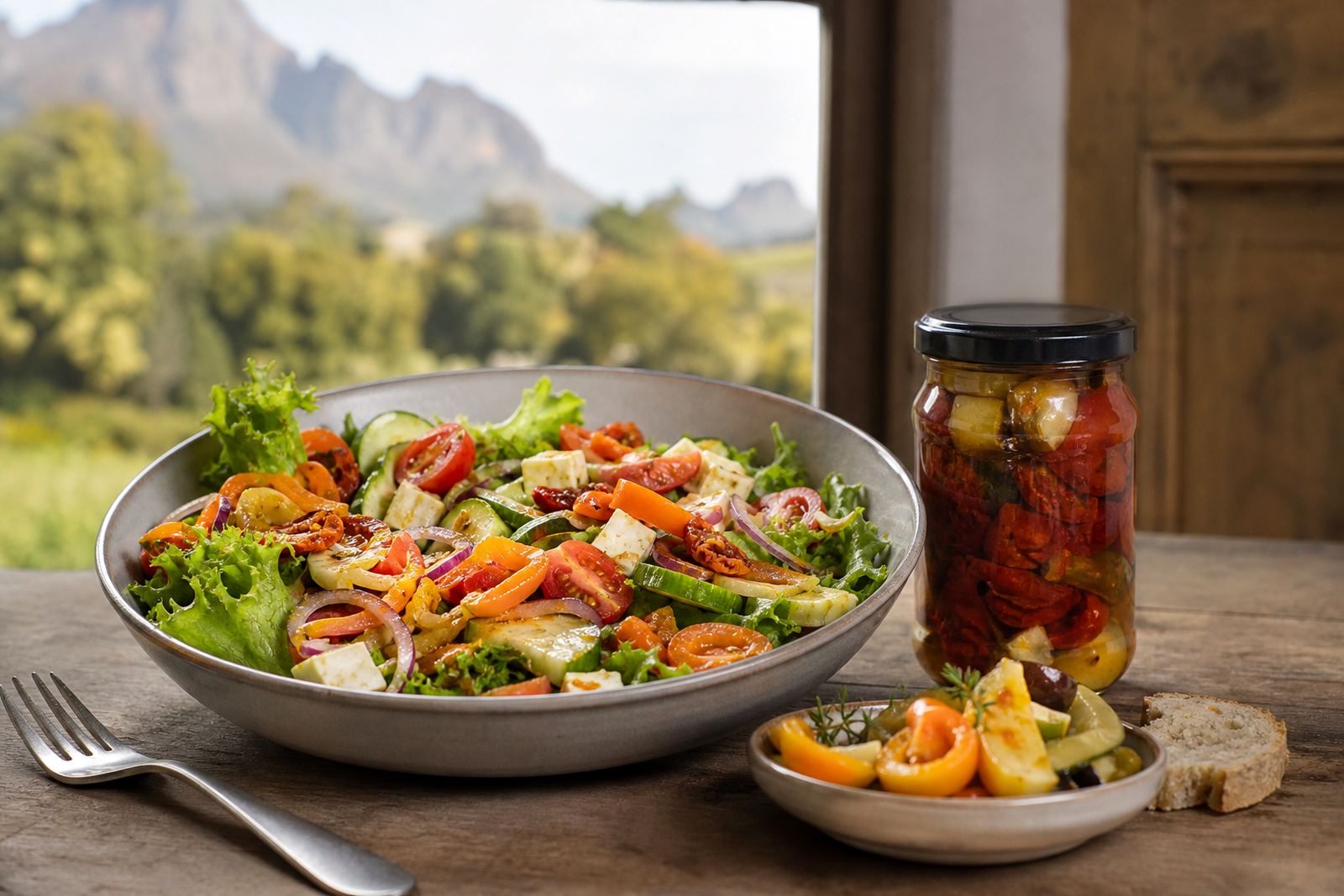
In practice, pickles give you three things at once. They add brightness, they add texture, and they bring a familiar savoury note that sits well with South African meals. You do not need a lot. Even a spoon or two of finely sliced pickles can change a side salad into something people actually go back for.
How to use pickle slices without overdoing it
The easiest way to start is to treat pickles like a seasoning, not the main ingredient. If the salad already has strong flavours, such as olives, feta-style cheese, roasted peppers or cured meat, keep the pickles light. For a simpler bowl of greens, you can use a little more. It depends on the rest of the plate and how much sharpness you want.
- Slice pickles thinly for green salads so they spread through the bowl evenly.
- Use ribbons for softer texture when you want the pickles to mix with shaved carrot or cabbage.
- Chop them finely for potato salad, pasta salad or egg salad.
- Keep the juice in the jar for dressing, but add it slowly so the salad does not get too wet.
If you are making lunch at home in Paarl, or packing food for a workplace in Cape Town or Stellenbosch, this approach keeps the salad lively without turning it into a pickle-heavy mix. A small amount goes far, and it helps the other ingredients stay clear in taste.
Pairings that make the sharpness taste balanced
Pickles sit best beside ingredients that bring softness or sweetness. Think of avocado, roasted pumpkin, boiled potato, chickpeas, grated apple, corn kernels, cucumber or fresh herbs. Those softer elements make the sharp edges feel clean rather than harsh. That balance is what makes a salad feel finished instead of thrown together.
For a weeknight supper, try a bowl of baby leaves, sliced red onion, boiled eggs and a few pickle ribbons. Add toasted seeds if you have them. For a braai side, use chopped pickles with cabbage, carrot and a plain dressing made with oil, a touch of mustard and a spoon of pickle brine. It is simple, but it works.
- With roast chicken: pickles, lettuce, tomato, cucumber and a light herb dressing.
- With potato salad: chopped pickles, spring onion and boiled egg.
- With grain salads: pickles, chickpeas, parsley and roasted vegetables.
- With slaw: shredded cabbage, carrots and thin ribbons of pickle.
A local plate from Paarl to Gqeberha
Think of a family lunch in Paarl, where the table has sliced tomatoes, cold roast chicken and leftover potatoes from the previous night. A few pickle pieces can pull that food together without any fuss. The same idea works for caterers and home cooks serving in Somerset West, Durban or Gqeberha, where the weather can call for something fresh but still satisfying.
In hotter coastal weather, especially when humidity is high, a sharp salad can feel more useful than a heavy side dish. Pickles help with that because they stay lively when paired with crisp vegetables. They also travel well for packed lunches, though it is best to keep dressing separate until serving time. If you are using the salad for an event, keep a small extra jar at hand. People often want a little more of the tang once they taste it.
Simple ways to build a better salad at home
You do not need complicated ingredients to get good results. Start with one green, one crunchy vegetable, one soft ingredient and one sharp note. Pickles fill that sharp note neatly, so the rest of the bowl can stay plain and fresh. A salad built this way feels organised, even if it took only ten minutes.
- Base: lettuce, cabbage, rocket or baby spinach.
- Crunch: cucumber, carrot, radish or celery.
- Softness: avocado, boiled egg, roast pumpkin or chickpeas.
- Sharpness: pickle slices, ribbons or a spoon of brine.
For dressing, you do not need much. Oil, a little vinegar or pickle juice, salt and pepper is enough for most bowls. Taste before adding more. If the pickles are already quite punchy, the dressing can stay mild. That is usually where the best balance sits.
How Cumato pickles fit into everyday cooking
Cumato makes sun-dried tomato and pickle preserves in Paarl using produce sourced from local farms. For salads, that means you can reach for a jar when you need quick flavour without starting from scratch. It suits weeknight meals, bulk lunches, hospitality platters and gift boxes where practical food matters more than fuss.
Customers across South Africa order for homes, offices and events, including Cape Town, Johannesburg, Pretoria, Durban and Gqeberha. Through the enquiry form on the contact page, it is easy to ask about online orders, nationwide courier, custom hampers, event favours, corporate gifting, stockist enquiries, seasonal orders, subscription boxes, wedding orders and hospitality supply. For the kitchen, though, the point stays simple: a few pickle slices can make an ordinary salad worth finishing.
When the salad needs a quicker finish
If your salad tastes flat, the answer is not always more salt. Try a little acidity first. Chop in pickles, add a ribbon or two, or use a splash of brine in the dressing. That is often enough to lift tomatoes, greens and boiled vegetables without changing the whole dish.
The best salads are not complicated. They just have enough contrast to keep each bite interesting. Pickles bring that contrast with very little effort, and that makes them a useful part of the South African kitchen all year round.