
Why Tomato Preserve Works So Well In Pastry
Tomato preserve is a handy ingredient for bakes because it gives you flavour and moisture in one spoonful. In pastry, that matters. You want enough richness to carry through the crust, but not so much liquid that the base turns soft before it reaches the table.
In a tart or savoury slice, tomato preserve can stand in for part of a sauce layer. It spreads easily, holds seasoning well and brings a rounded tomato note that suits onion, spinach, feta, cheddar, olives and roasted peppers. For home cooks in Paarl or Somerset West, it is also a practical way to use up a pastry sheet and still put something decent on the table during a busy week.
The best results come from using it with ingredients that add body. Think grated cheese, caramelised onions, egg, cream cheese or cooked veg. That balance keeps the filling neat, especially when the oven is running hot and you need the pastry to set before the juices run.
Tarts That Slice Cleanly And Still Taste Fresh
Open tarts are one of the easiest places to use tomato preserve. A thin layer brushed over blind baked pastry gives you a base flavour without flooding the shell. From there you can add sliced courgette, roasted mushrooms, cherry tomatoes or crumbled goat's cheese, depending on what you have in the fridge.
For a cleaner finish, keep the preserve layer thin. Too much and the tart can seep at the edges. Too little and the flavour gets lost under the topping. A spoon or two is usually enough for a standard 23 cm tart shell, especially if you are adding salty cheese on top.
- Blind bake the pastry until pale golden before adding the filling.
- Mix tomato preserve with a little mustard for sharper flavour in cheese tarts.
- Top with onions cooked until soft, not browned too hard, so the tart stays balanced.
- Finish with fresh herbs after baking, not before, to keep the flavour bright.
If you are serving a tart at a family lunch in Stellenbosch, cut it after resting for 10 minutes. That short wait helps the filling settle and gives neater slices.
Savoury Scrolls For Lunch Boxes And Snacking
Scrolls are one of the most useful savoury bakes because they travel well and can be served warm or at room temperature. Tomato preserve gives the dough a punchy centre, especially when spread with a little cream cheese or grated cheddar before rolling. It is a simple option for school lunches, work meetings or a weekend platter.
Use a rectangle of rolled puff pastry or savoury yeast dough, spread the preserve from edge to edge, then add a dry filling like cheese, chopped spinach or finely sliced onions. Keep the layer even so the scrolls bake neatly and do not burst open. A tight roll helps, but don't squeeze the filling out as you go.
- Chill the rolled log for 15 minutes before slicing for cleaner pinwheels.
- Use a sharp knife rather than a sawing motion to keep the layers even.
- Bake on paper lined trays so the preserve does not stick to the pan.
- Allow space between scrolls because the filling can bubble a bit during baking.
For a Durban-style twist, add a pinch of mild curry powder to the filling. It is not for everyone, but it can work well with tomato preserve and cheddar in a lunch box bake.
How To Stop The Base From Going Soggy
The main challenge with tomato preserve in baking is moisture. A wet filling can soften pastry before the crust has time to crisp, especially in humid coastal weather. The fix is not to avoid preserve, but to manage how it is used. Keep the layer thin, and pair it with ingredients that absorb a little liquid.
If you are making a savoury pie or tart in Gqeberha or Durban, where the air can be heavy, blind baking becomes more important. A brushed layer of beaten egg or a thin cheese layer over the pastry can help create a barrier. Some cooks also scatter a few breadcrumbs or semolina on the base before adding the filling.
Another good habit is to cool cooked vegetables before using them. Warm onions, mushrooms or spinach can release extra moisture into the tart. If you want a firm result, cool them properly and avoid overfilling the shell. A tidy bake is often better than a crowded one.
Flavour Pairings That Suit South African Tables
Tomato preserve is versatile enough for both everyday cooking and more special bakes. It works especially well with ingredients that are common in South African kitchens, so you do not need to overthink it. If the filling already has salt, fat and a bit of freshness, the preserve fits in easily.
Good pairings include feta and spinach, cheddar and onion, roasted butternut and sage, or sliced boerewors-style sausage in a savoury pie. For a lighter tart, add fresh basil or parsley. For something more filling, use bacon, mushrooms and a little cream cheese.
- Cheese brings salt and richness.
- Onion adds sweetness once cooked down.
- Leafy greens help balance the preserve.
- Roasted vegetables give the bake more texture.
- Fresh herbs lift the finish after baking.
At a small gathering in Paarl, a tray of tomato preserve scrolls alongside a green salad can be enough for an easy lunch. It is not complicated cooking, just practical food that tastes good and travels well.
A Simple Local Bake For Weekends Or Orders
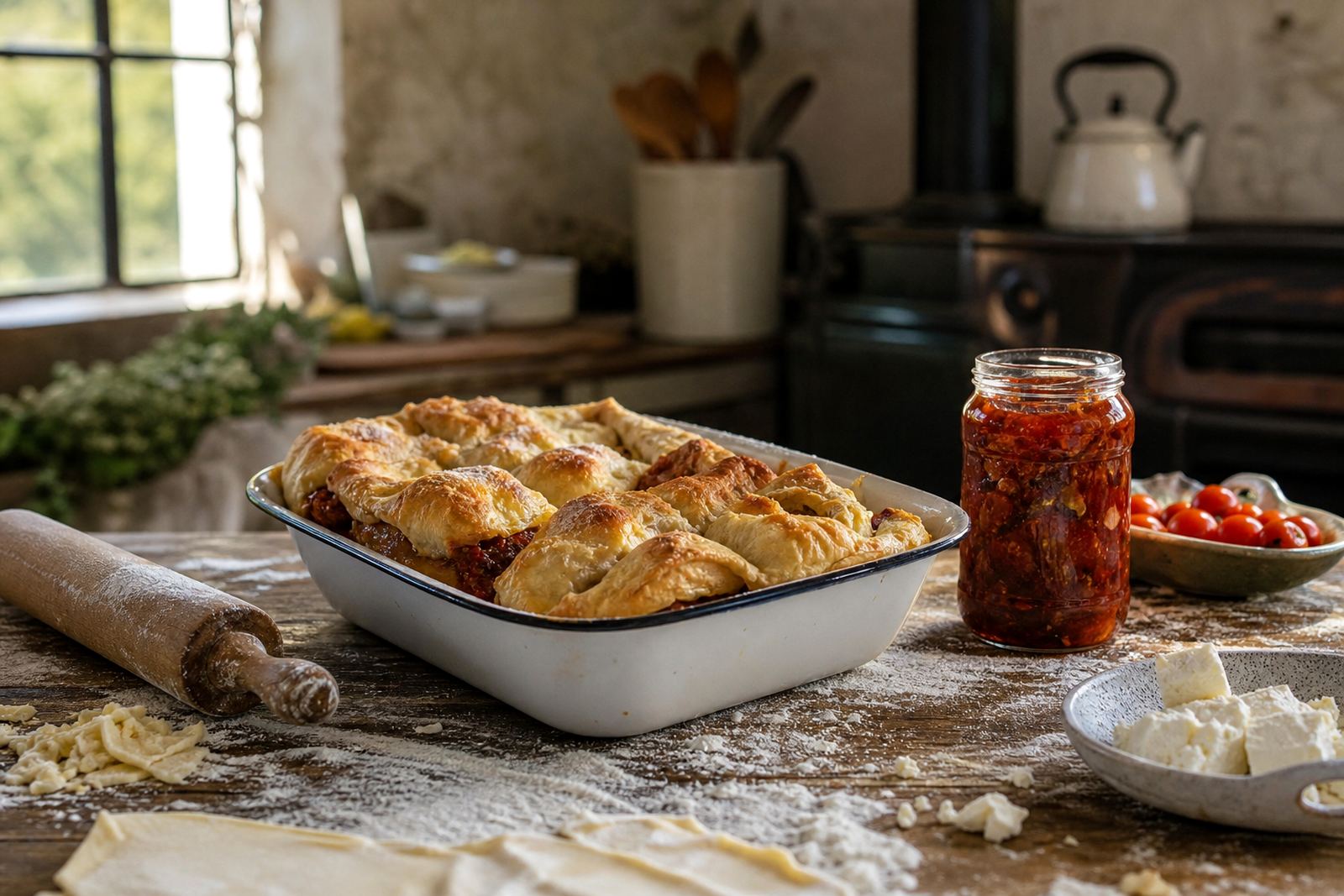
A good example is a savoury tart made with puff pastry, tomato preserve, sliced red onion and crumbled feta. Blind bake the base, spread on a thin layer of preserve, add the onions, then scatter over the feta and a little black pepper. Bake until the pastry is crisp and the top has some colour. It is straightforward, but it holds its own on a buffet table or packed picnic basket.
For larger orders, such as hospitality platters, corporate functions or wedding service tables, the same principle applies. The filling should be neat, the pastry should stay crisp and the flavour should still be clear after the bakes have cooled. That is where a preserve with proper body helps, because it brings consistency from tray to tray.
Whether you are baking in a home kitchen in Cape Town or preparing savoury items for a group in Pretoria, tomato preserve gives you a quick way to build flavour without making the process fussy. It is one of those ingredients that earns its place by doing a simple job well.