
Start with the preserve, then build around it
When you are planning a platter, begin with the jar, not the board. Sun-dried tomato preserve brings a deep tomato flavour with a savoury edge, while pickle preserve adds tang and bite. Both work well as anchor flavours, especially when you want the platter to feel considered without needing a long prep list.
For a balanced spread, use one preserve as the centre point and then add foods that soften or lift it. Something creamy, something neutral and something crisp will usually do the job. A slice of sourdough with tomato preserve and a mild cheese tastes complete because each bite has contrast. Pickle preserve can cut through richer items like pâté, roast meats or mature cheddar, so it suits heavier platters very well.
If you are serving a mixed group, keep a little bowl of each preserve on the side and label them clearly. That helps guests mix and match, and it also keeps the crackers from going soggy too quickly.
Bread choices that hold up well on a shared board
The right bread can make or break a platter. You want slices that stay firm long enough for guests to serve themselves, especially if the platter will sit out for a while at a church hall, a wine tasting or a corporate function. In coastal humidity, softer breads can lose texture quickly so choose loaves with structure.
- Sourdough slices, lightly toasted, for a chewy base with good bite.
- Seeded crackers for smaller portions and a stronger crunch.
- Flatbreads broken into shards for easy stacking with cheese.
- Mini bread rolls, halved and warmed slightly before serving.
- Ciabatta pieces brushed with olive oil and toasted just before plating.
A practical tip is to keep the bread plain. That lets the preserve do the work. If the bread is already heavily flavoured, the board can become muddled and you lose the clean savoury note that makes these preserves so useful. For larger functions in Paarl or Stellenbosch, prep the bread in batches and top just before service so the textures stay right.
Cheese pairings that stay balanced and not too rich
Cheese and preserves are a good match, but the pairing should still feel balanced. A salty preserve with a salty cheese can be too much. A softer cheese gives you room to taste the tomato or pickle properly. For a neat platter, include two or three cheeses with different textures and strengths.
- Fresh cream cheese for a smooth base under sun-dried tomato preserve.
- Goat cheese for a tangy contrast with pickle preserve.
- Mild gouda for a crowd-friendly option that works with both preserves.
- White cheddar for a firmer slice that pairs well with savoury bites.
- Blue cheese, used sparingly, with tomato preserve for stronger flavour contrast.
Slice the firmer cheeses into manageable pieces so guests do not need a knife for every bite. For softer cheeses, place a spoon nearby and keep the preserve in a small dish beside it. That way the cheese stays neat and the board looks orderly. If you are catering for a mixed group, one mild cheese and one sharper cheese is usually enough, no need to overdo it.
Savoury bites that make the platter feel complete
Preserves are not only for bread and cheese. They also work well with savoury extras that add variety and colour. Think of these as the supporting items that fill the gaps between the main flavours. A platter with only dairy and crackers can feel flat. A few well chosen savoury bites bring it to life.
Good options include olives, roasted peppers, biltong slices, marinated artichokes, cucumber ribbons, and small savoury biscuits. You can also add grilled chicken strips or sliced roast vegetables if the platter needs to serve as a light meal. The preserve can be dabbed onto each bite or offered in a small bowl for dipping. For a home lunch in Durban or Gqeberha, pickle preserve with roast chicken, cucumber and a crisp cracker makes a simple but satisfying plate.
If you are preparing for a hotter day, keep wetter ingredients separate until the last minute. That helps the board stay tidy and keeps the crackers from softening too fast. Small portions are better than big piles, because guests can always come back for more.
How to lay out a board for guests to serve themselves
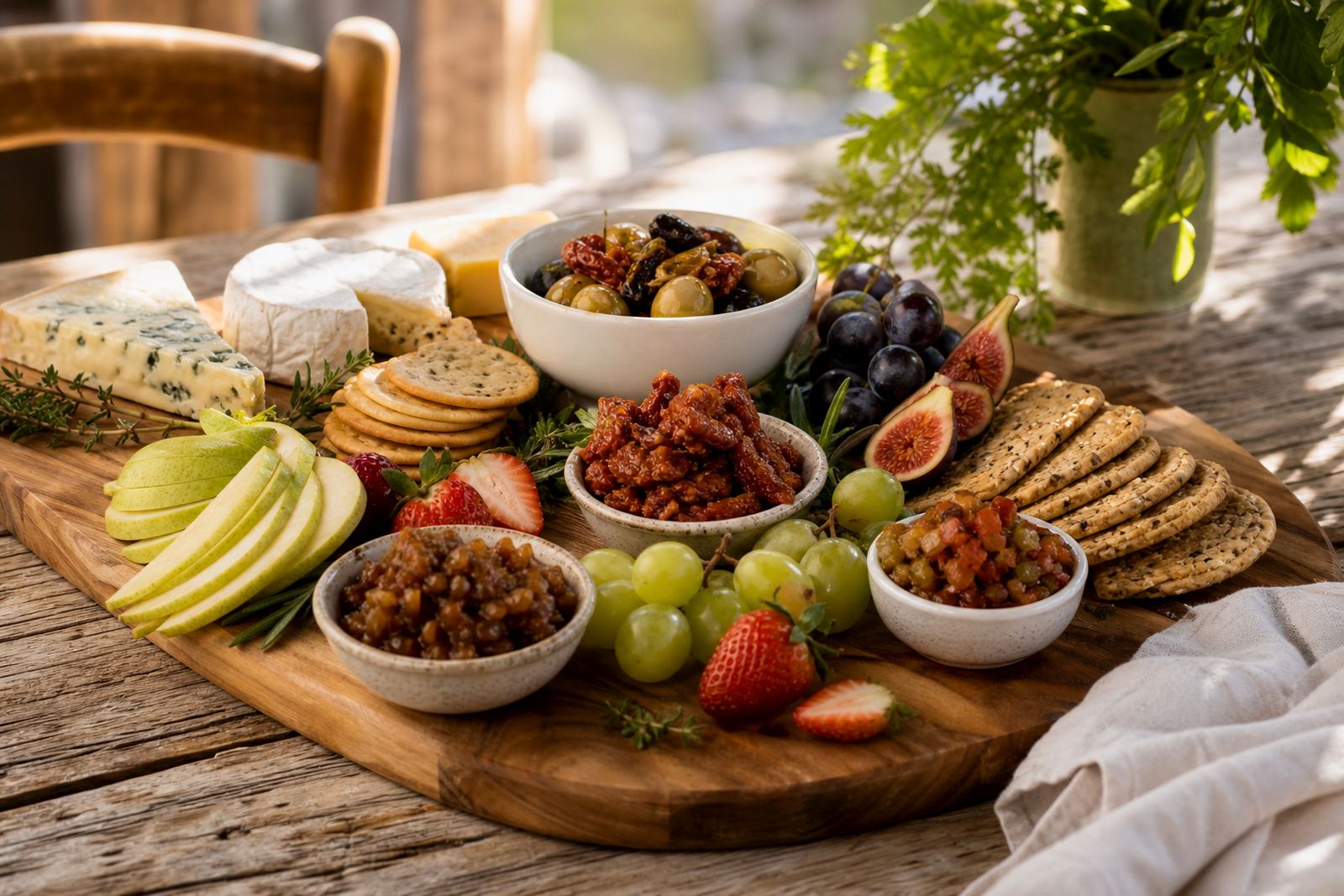
A good platter should be easy to read at a glance. Place the preserves in small bowls first, then work outward with the cheeses, breads and savoury bites. This keeps the board practical and stops everything from blending together. Give the richest flavours a little space so they do not crowd the milder items.
Use odd numbers where it makes sense, such as three cheeses or five small bowls, because it creates a natural rhythm on the board. Keep spoons in each preserve and separate knives for cheese, and try to leave a clear path for guests to reach what they need without leaning over the whole platter. It sounds simple, but at a busy function these small details matter.
- Put the preserve bowls slightly apart from the crackers.
- Place harder items like nuts or biltong near the edges.
- Use herbs, grapes or sliced peppers to fill gaps.
- Keep wet items away from the bread until serving time.
- Include one soft item and one crisp item near each preserve.
For an event in Cape Town or Johannesburg, this kind of layout makes self-service smoother and keeps the platter looking neat even after several guests have helped themselves. It also helps when tables are shared and not everyone arrives at once.
A local example from Paarl to the rest of South Africa
Picture a late-afternoon gathering in Paarl with a mix of family, neighbours and a few work colleagues. The table has toasted sourdough, mild gouda, goat cheese, olives and a small pile of biltong. One bowl holds sun-dried tomato preserve, another has pickle preserve. That is enough to build a platter with good balance, and each guest can choose what suits them.
Now imagine the same idea sent by courier to a corporate lunch in Pretoria or a wedding table in Somerset West. The ingredients do not need to be complicated. They need to travel well, taste clear and work together without fuss. That is where these preserves are useful, because they give the board a local flavour without requiring a long list of extras. A platter should feel generous, not fussy, and the preserves help with that.
From a small family supper to a large hospitality order, the same principle applies. Keep the flavours distinct, the textures varied and the portions easy to manage. That is how a simple board becomes a proper spread.
Best times to use these pairings through the year
Platter pairings with preserves work in every season, but the style of board can change with the occasion. In summer, keep things lighter with fresh cucumber, grapes, toasted bread and mild cheese. In cooler months, bring in richer options like roast vegetables, firmer cheese and warm bread. For festive seasons and year end functions, smaller bites and neat portions make service easier when there are many guests around.
For weddings, gift boxes, stockist orders or hospitality supply, it is useful to think about the crowd first. A mixed guest list usually needs familiar breads and cheeses with one or two sharper items for interest. For a more adventurous group, you can add stronger cheeses or more savoury accompaniments. Either way, the preserve should remain the part that ties everything together.
If you are planning an order from Paarl, Cape Town, Stellenbosch, Somerset West, Johannesburg, Pretoria, Durban or Gqeberha, keep your enquiry focused on the event type and serving size. That makes it easier to match the right mix of products to the way the platter will actually be used.